
Fluid Memory, a solo exhibition by Ľudmila Žilková / MILA ZILA, was held at vPRIESTORe in Bratislava from 19 September to 23 October 2026, curated by Júlia Deáková.
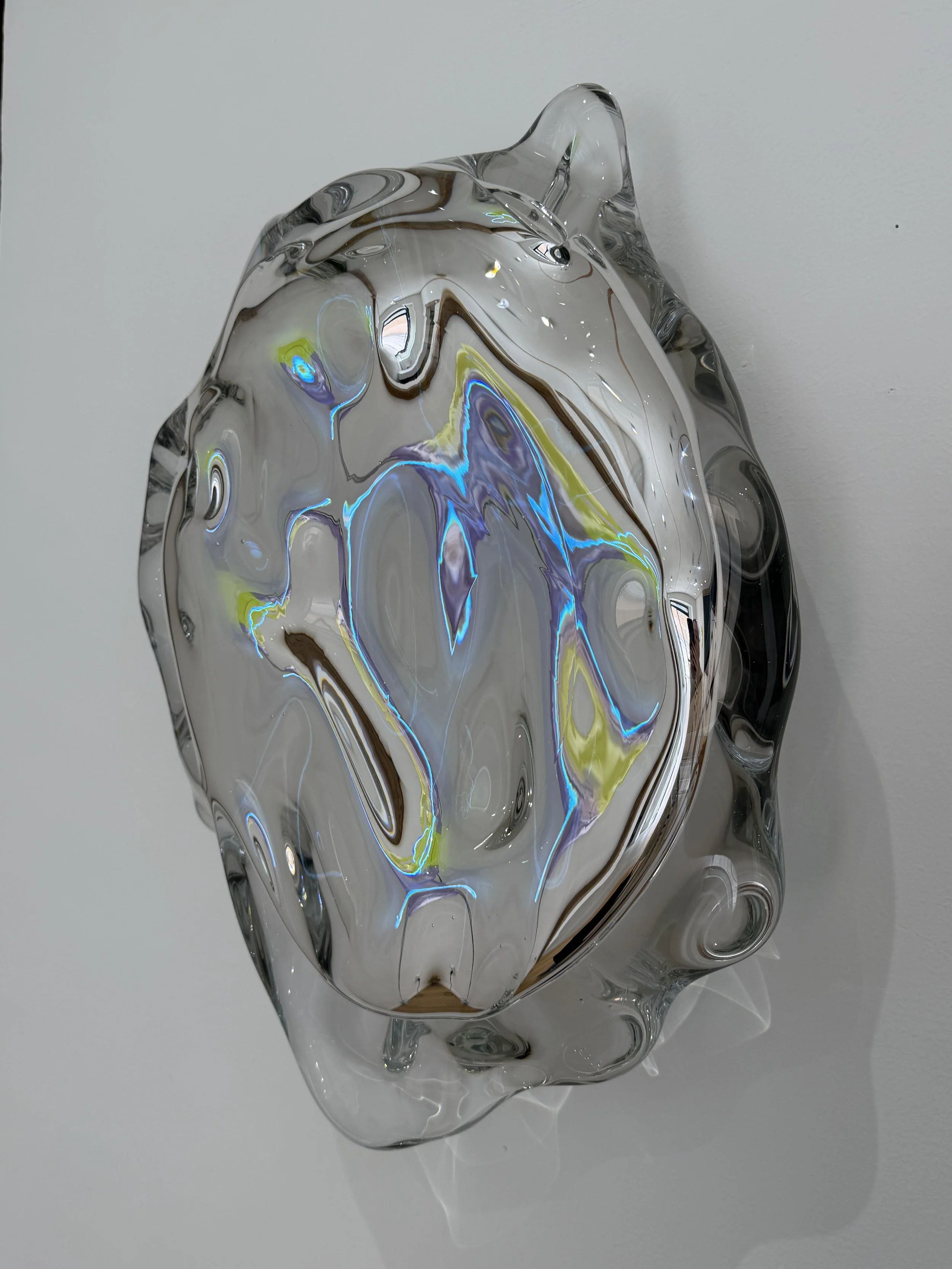
The silver wall piece catches more than the room. Within its curved surface, a blue neon line bends into an unfamiliar shape, while yellow and lilac arrive from a neighbouring work. For a moment, the exhibition seems to gather inside a single object. It is a compelling introduction to Fluid Memory, where the relationships between works become as absorbing as the objects themselves.
Ľudmila Žilková, working under the name MILA ZILA, gives reflection a sculptural form. The glass reshapes what it receives, drawing the surrounding space into its contours. Looking at one work can lead us towards another, discovered first as a fragment of colour or light within its surface. Each object has a distinct presence, yet its appearance remains open to what happens around it.
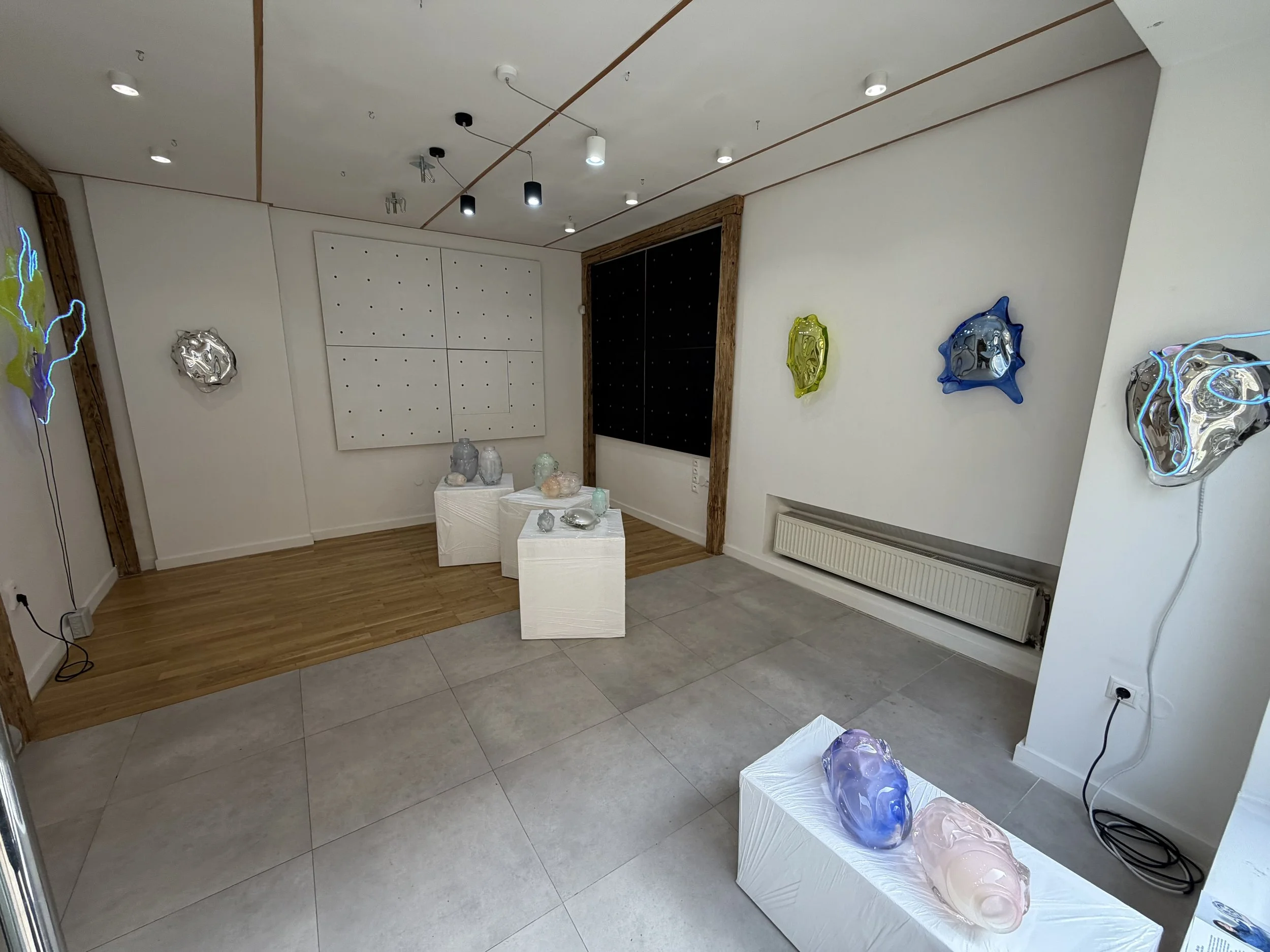
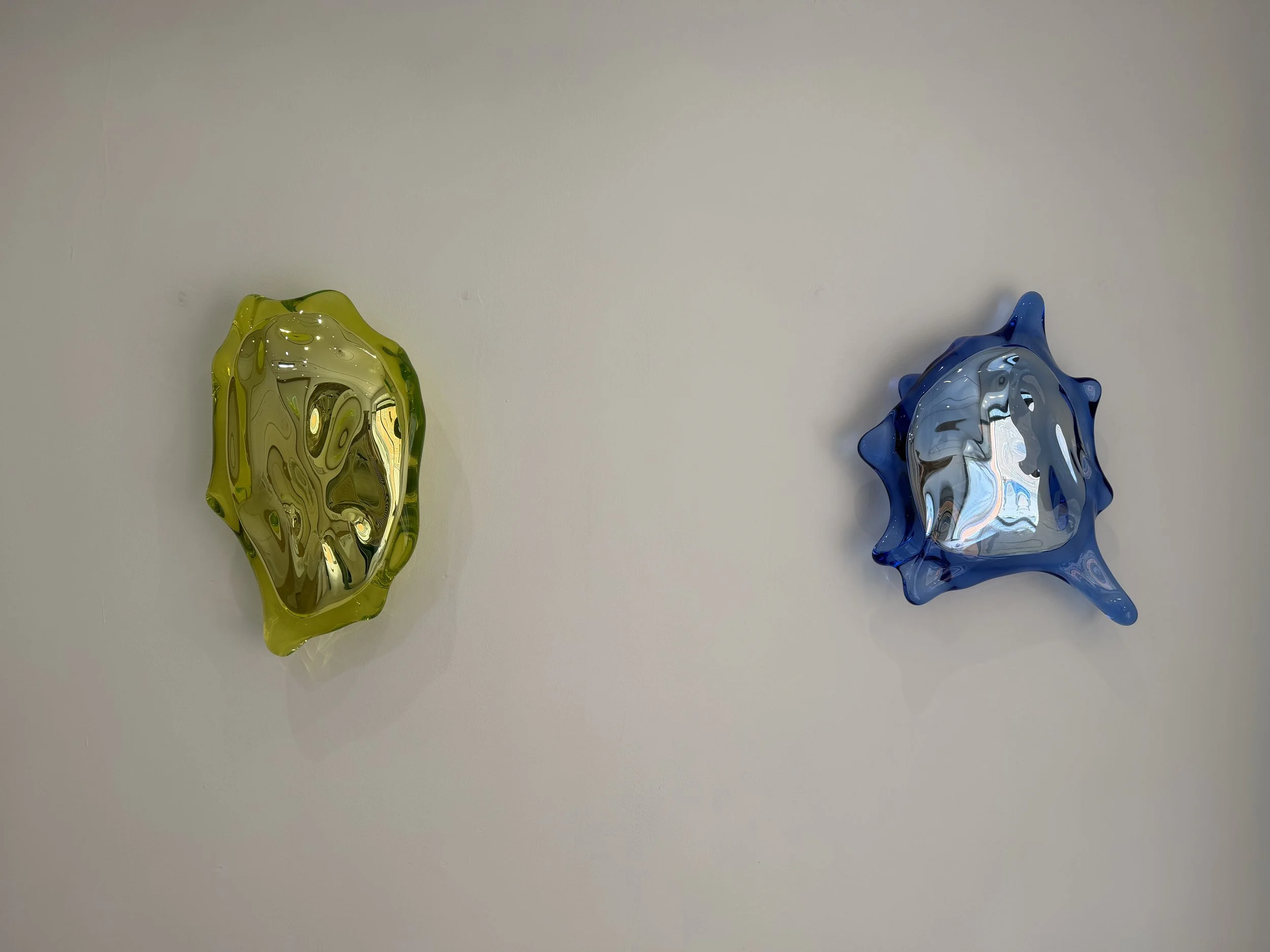
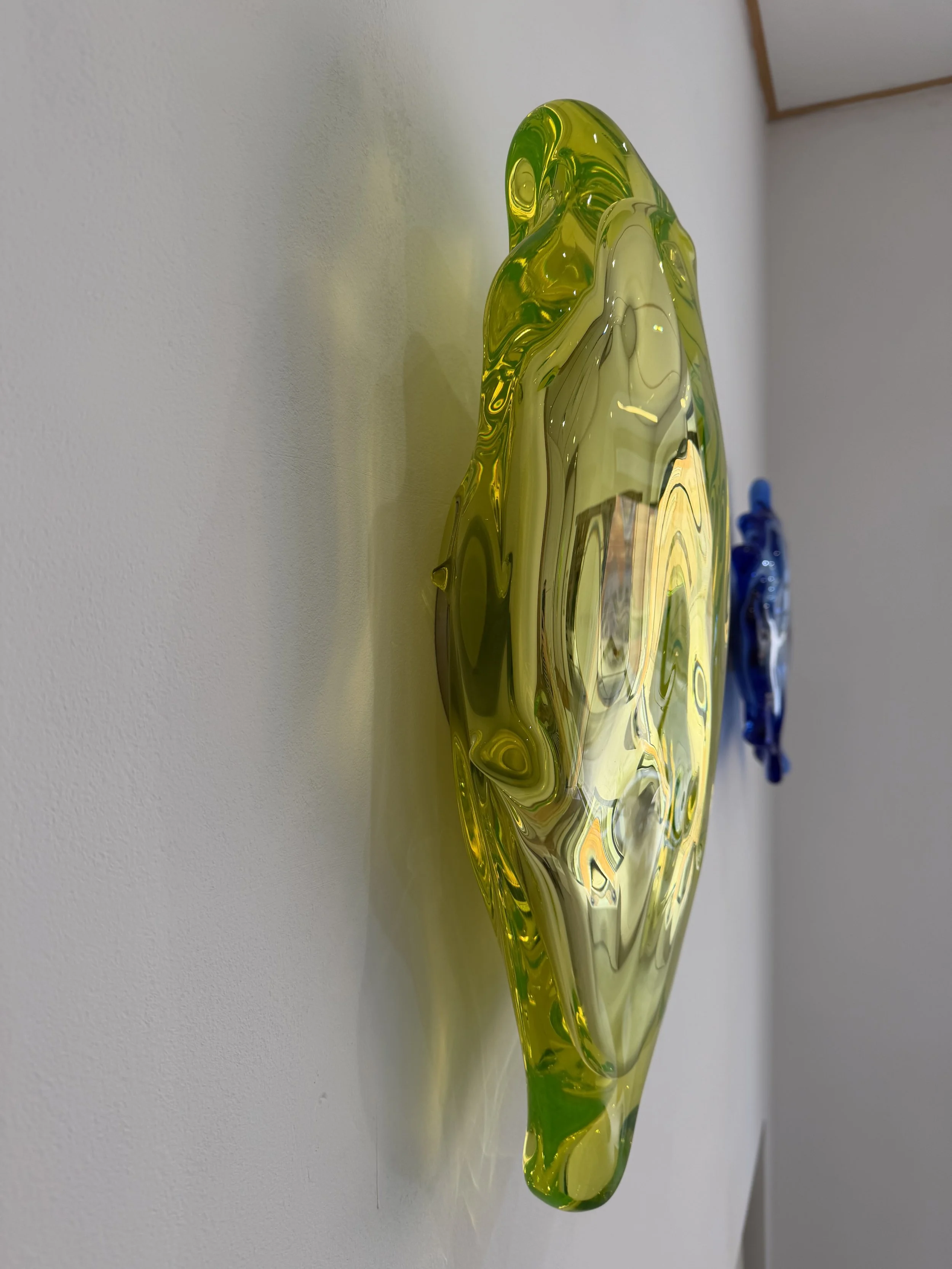
This openness gives the wall pieces much of their appeal. Their flowing contours offer an immediate, almost tactile attraction, while their reflections resist a settled view. Yellow and blue change the emotional register of the reflected space; a shift in position changes its proportions. The viewer participates through the simple act of moving. What we see belongs partly to the glass and partly to the encounter.
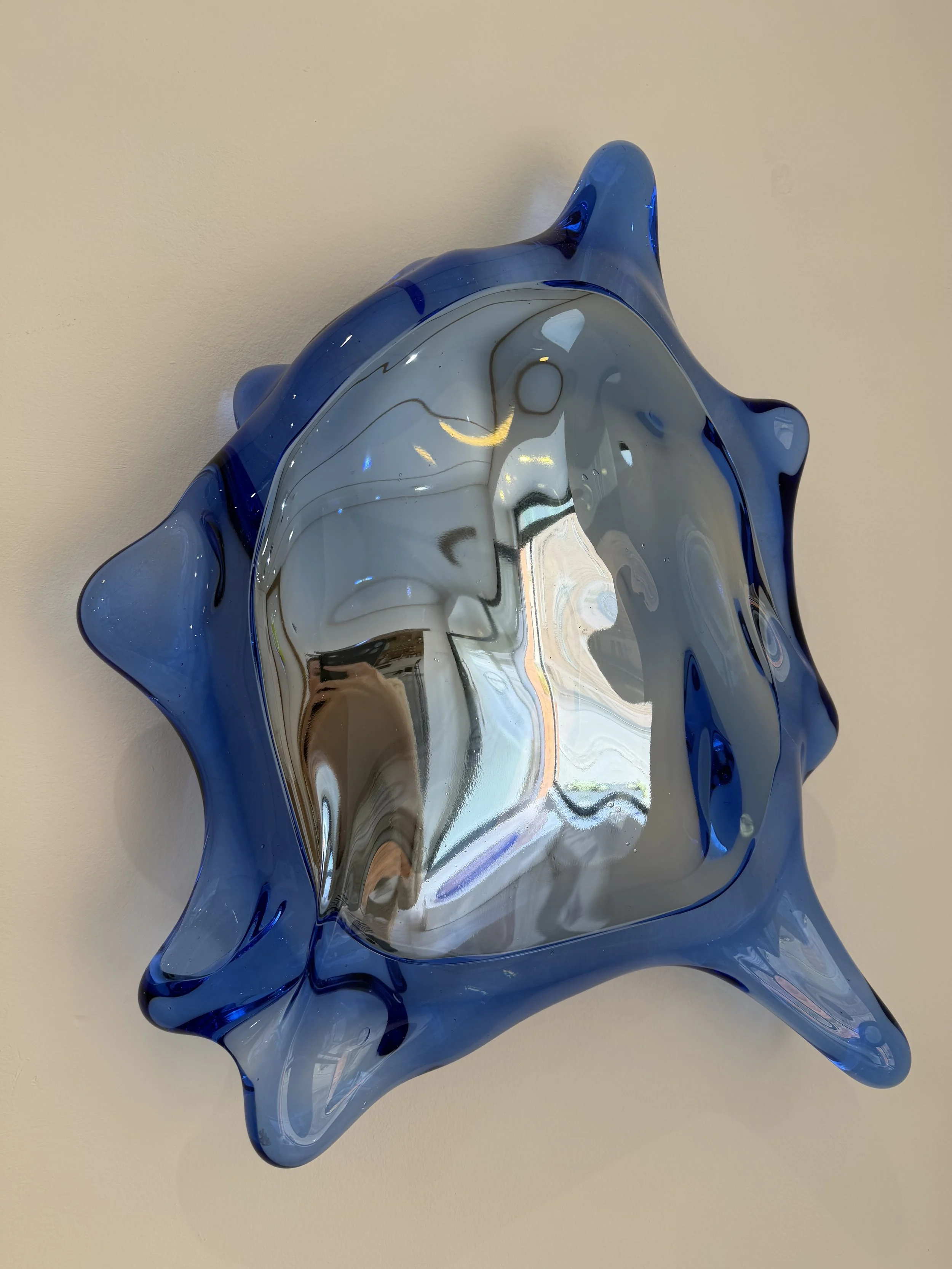
A Slovak artist based in Northern Bohemia, Žilková works across sculpture and collectible design. Her ongoing Personaproject begins with objects we already know how to approach: mirrors, vessels and forms associated with everyday use. That familiarity matters. It draws us close before the work unsettles our expectations, allowing a recognisable object to acquire a less familiar character.
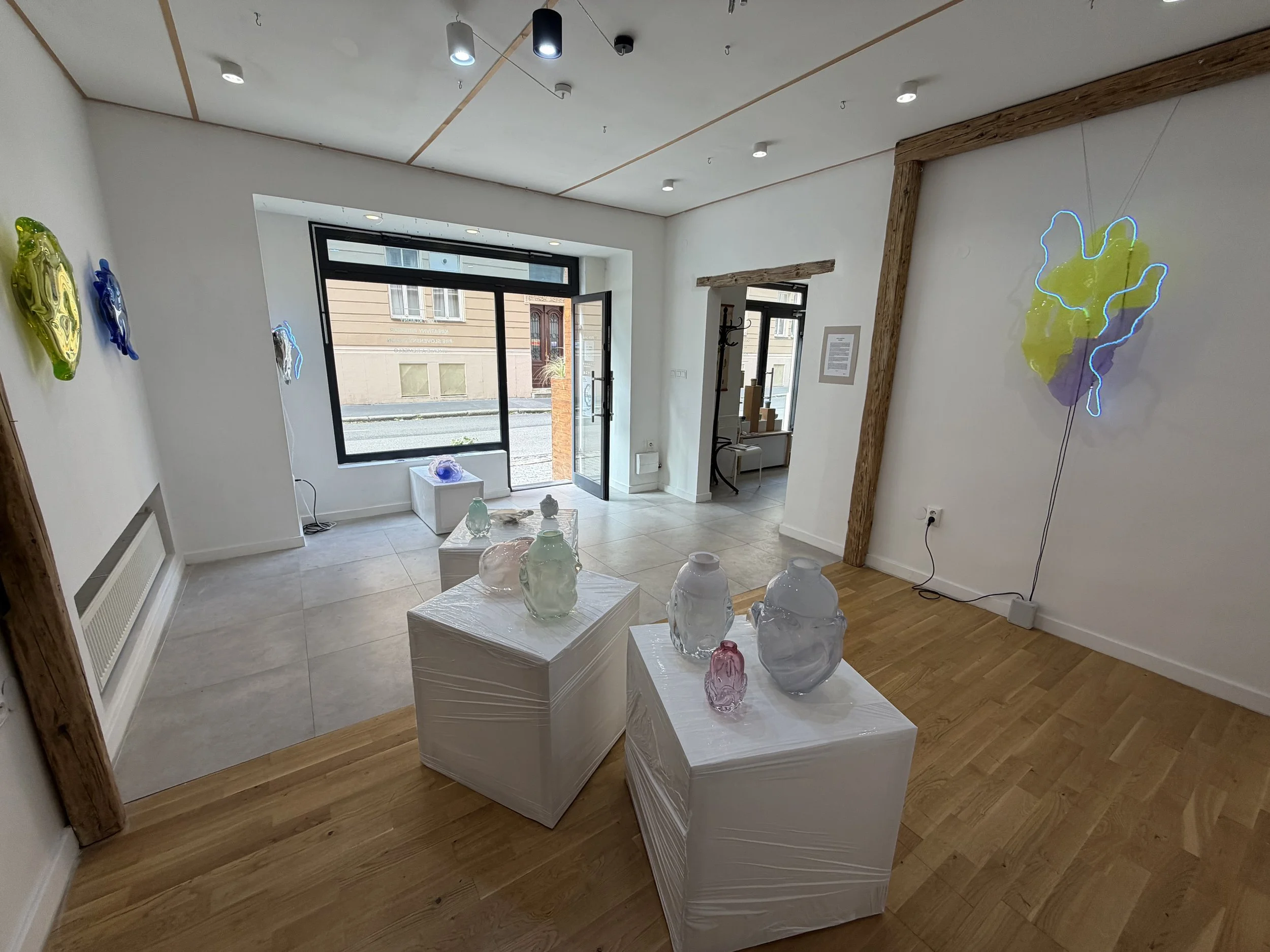
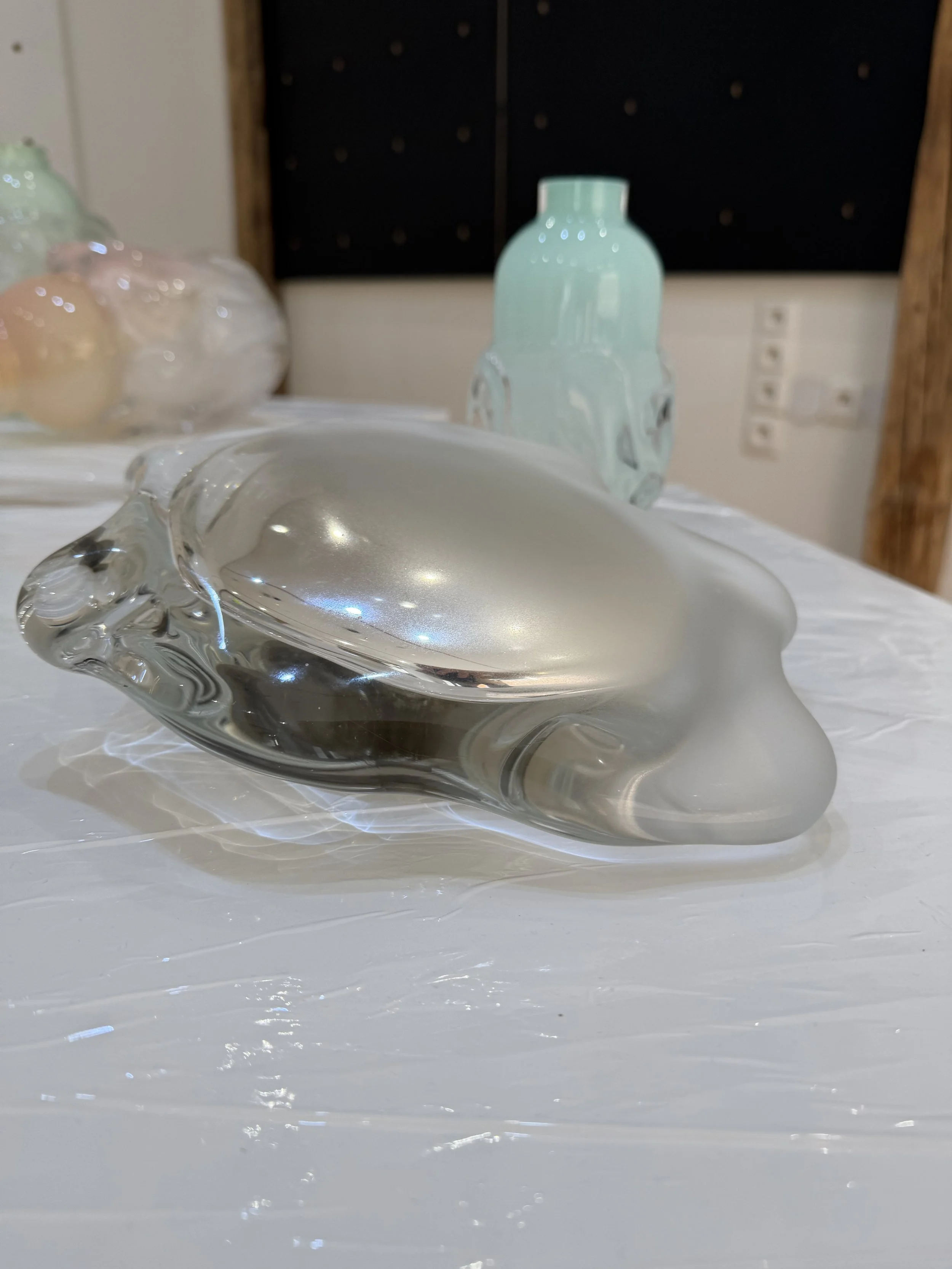
The vessels make this transformation particularly intimate. A defined neck or rounded body offers reassurance, while the glass around it introduces a freer rhythm. There is a tension between composure and release that gives these pieces their individuality. Their soft colours invite attention without exhausting it; the longer we look, the less adequate the familiar category of “vase” begins to feel.
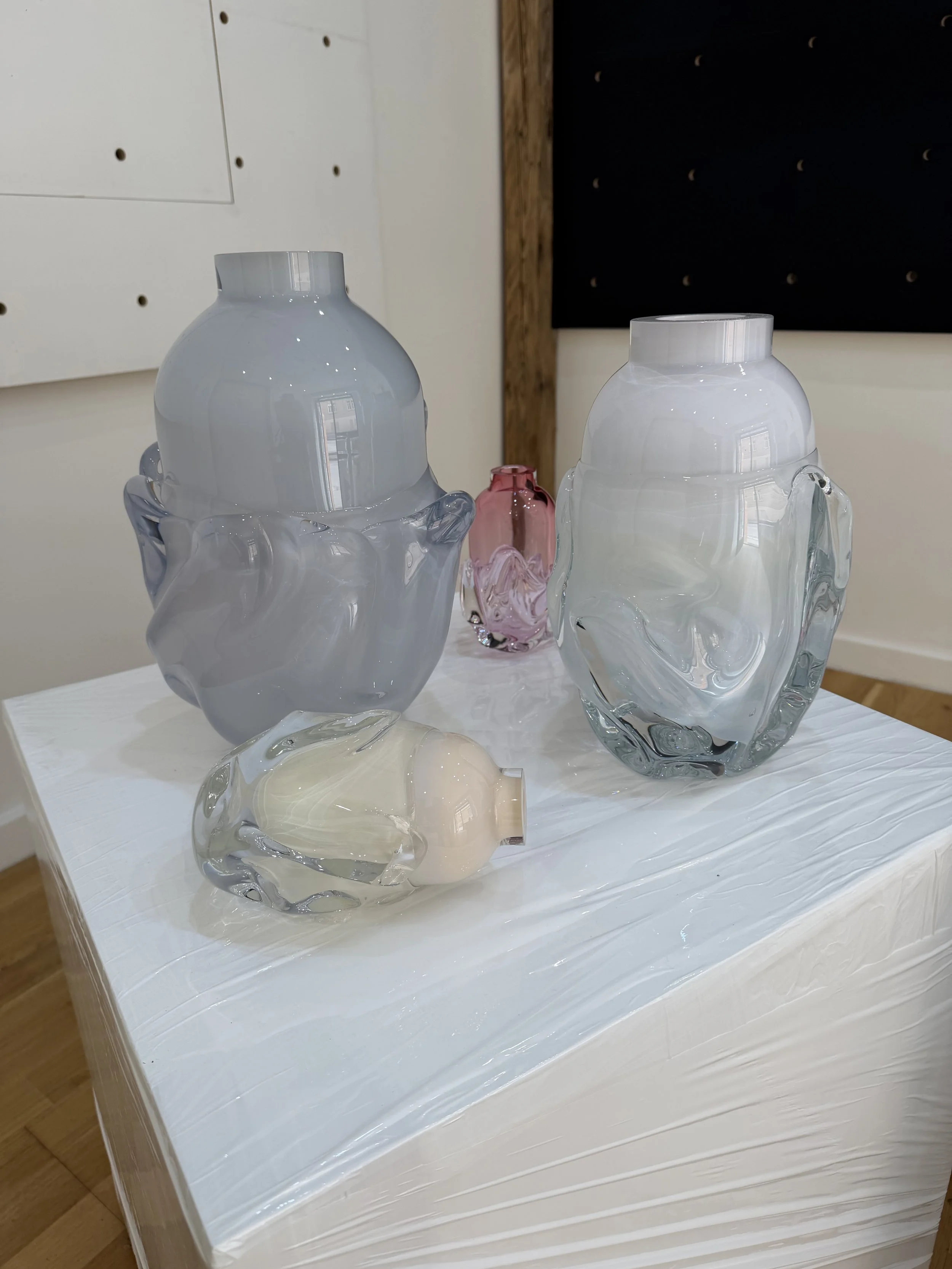
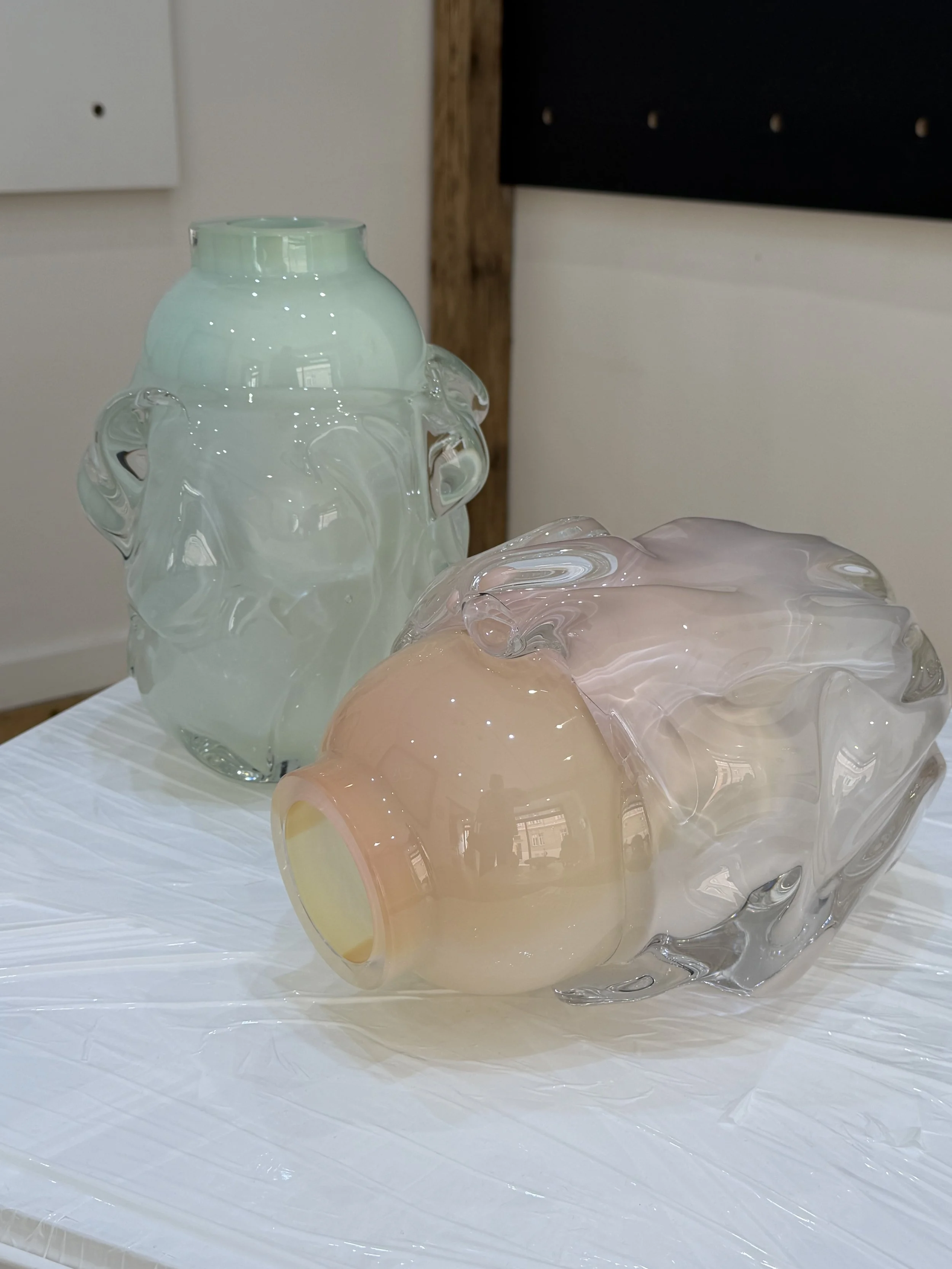
Displaying some vessels on their sides strengthens this uncertainty. An object associated with holding something is encountered as a body occupying space. Its opening, weight and internal depth become newly apparent. The pink and lilac pieces are especially engaging in this respect: their sensuous appeal draws us towards a form whose relationship with use has become more ambiguous.
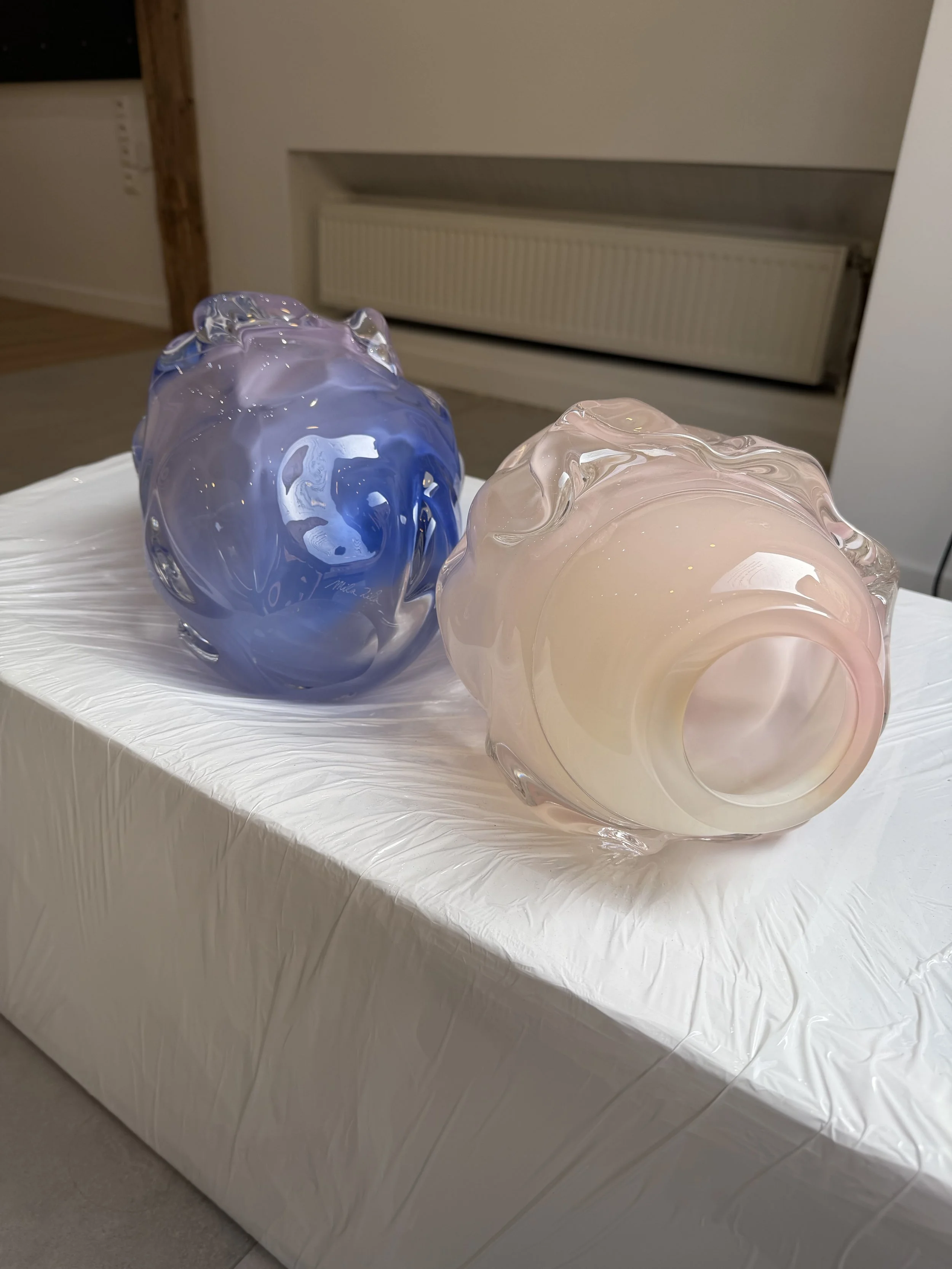
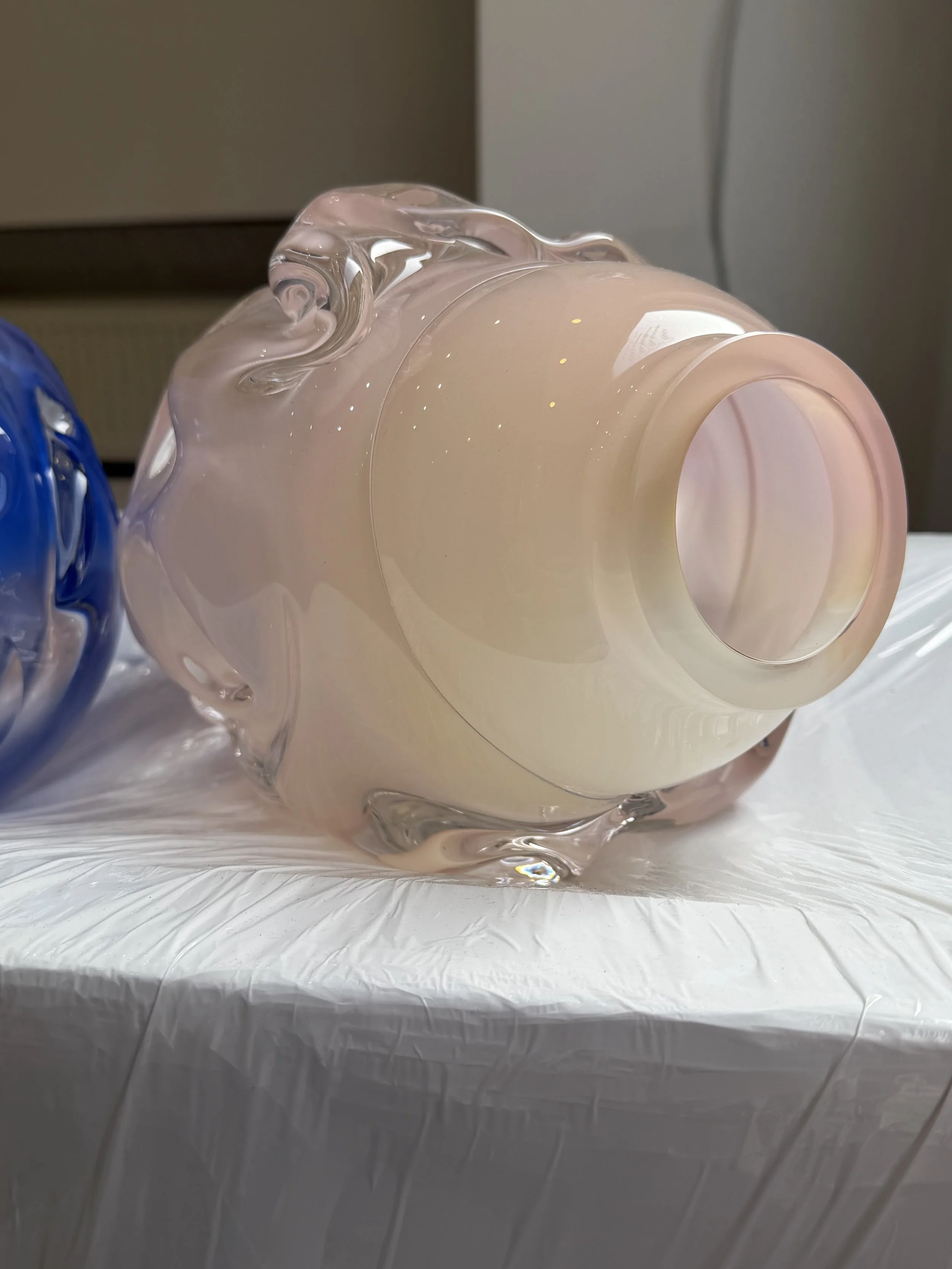
This balance between the familiar and the unpredictable develops during making. Žilková allows heat, gravity and internal tension to influence the glass, responding to conditions that cannot be entirely predetermined. Her decisions remain visible alongside the material’s own behaviour. The resulting irregularities give each piece the specificity of something that could only have emerged through that particular exchange.
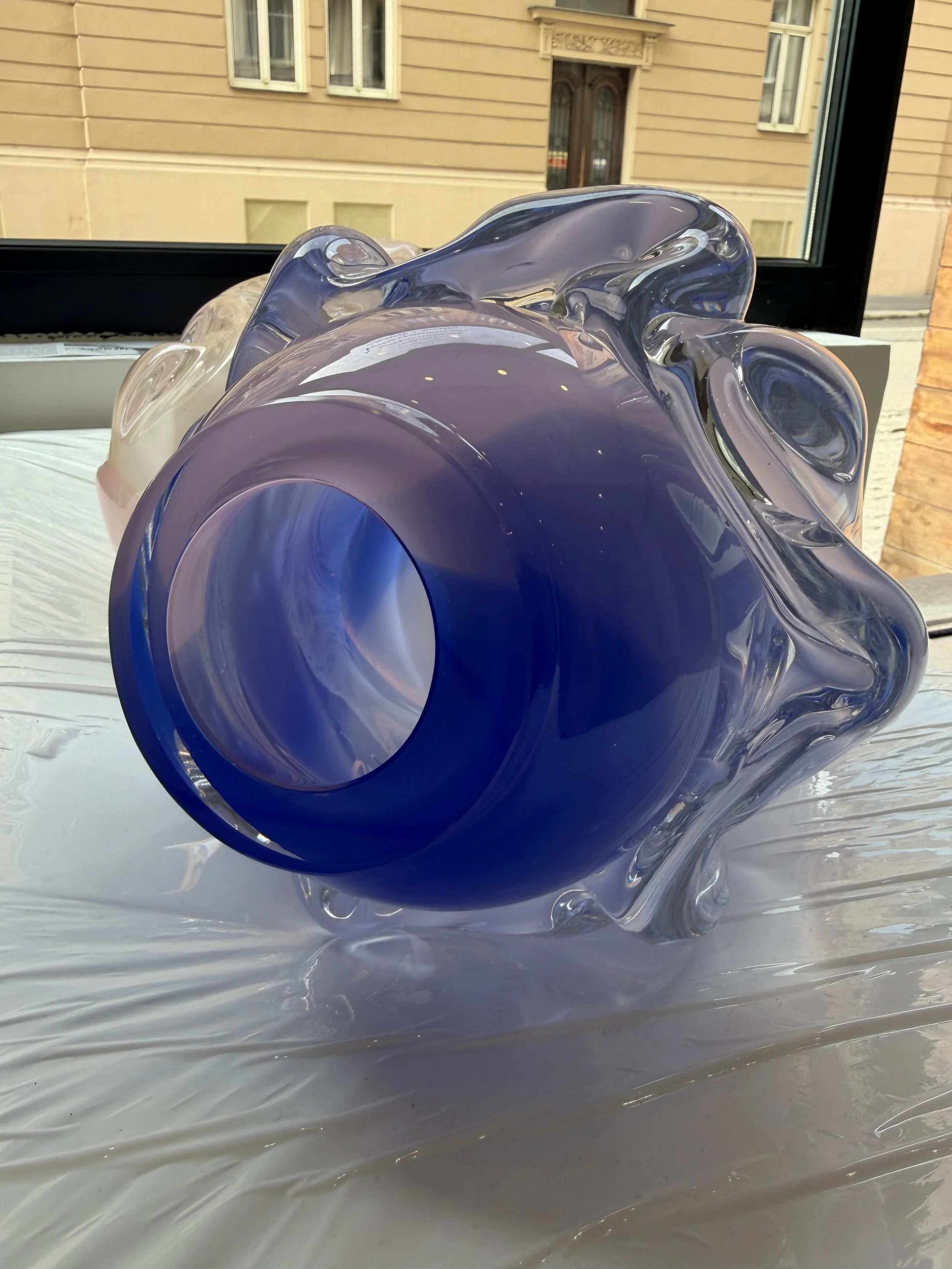
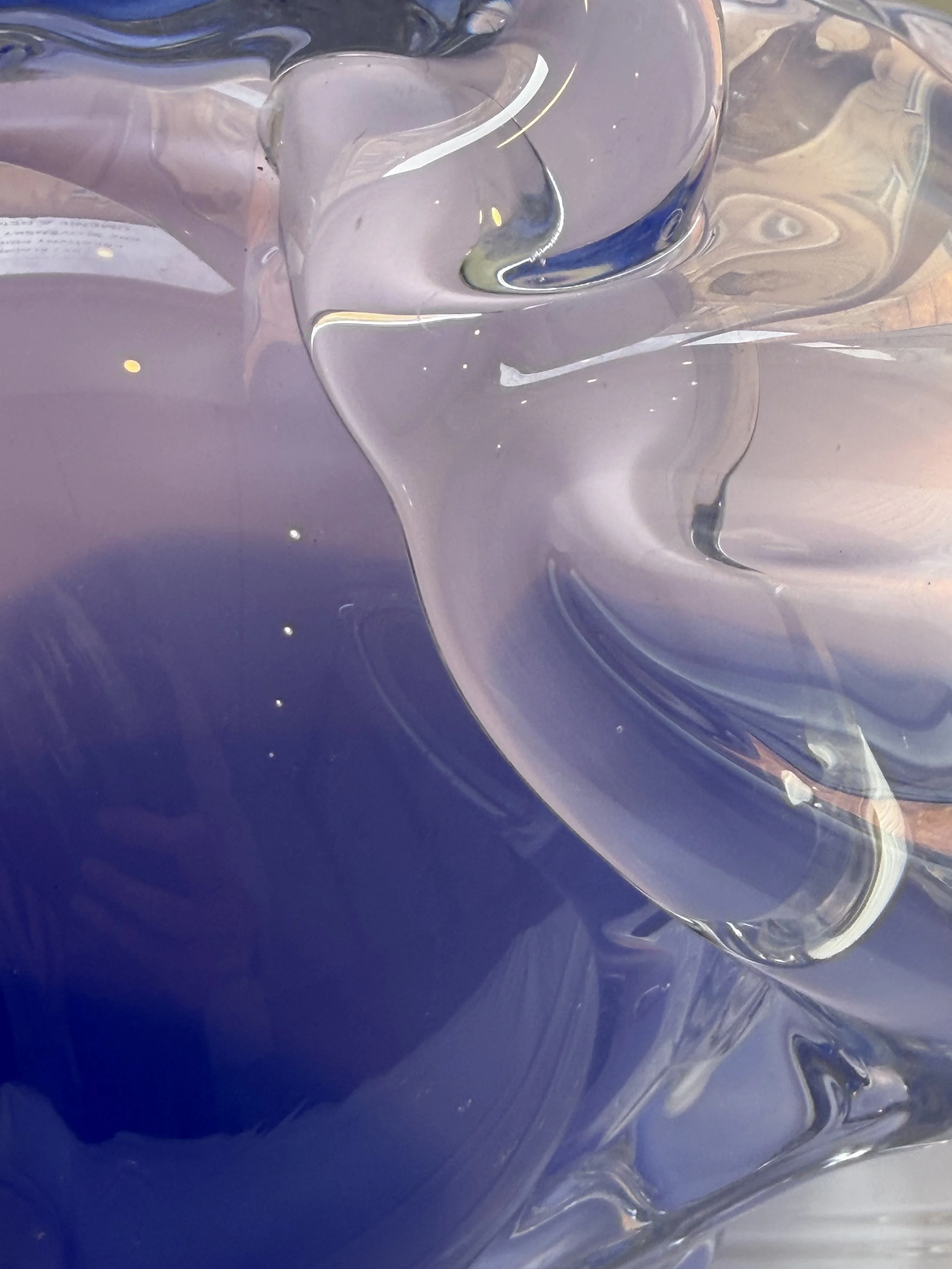
In her exhibition text, curator Júlia Deáková considers these traces as a form of material memory. The idea gives Fluid Memory its deeper resonance. A finished object carries its earlier states within it: movement becomes contour, an intervention becomes a fold. Through Persona, this also opens a reflection on identity as something formed through accumulated experience.
The neon works extend this enquiry beyond the body of the glass. A luminous line escapes the edge of a coloured surface, proposing another contour in the space around it. Elsewhere, neon meets its reflection and becomes difficult to separate from the image it creates. Light gives the works a presence that reaches beyond their physical boundaries, connecting with Žilková’s wider practice in flat glass, lampworking and installation.
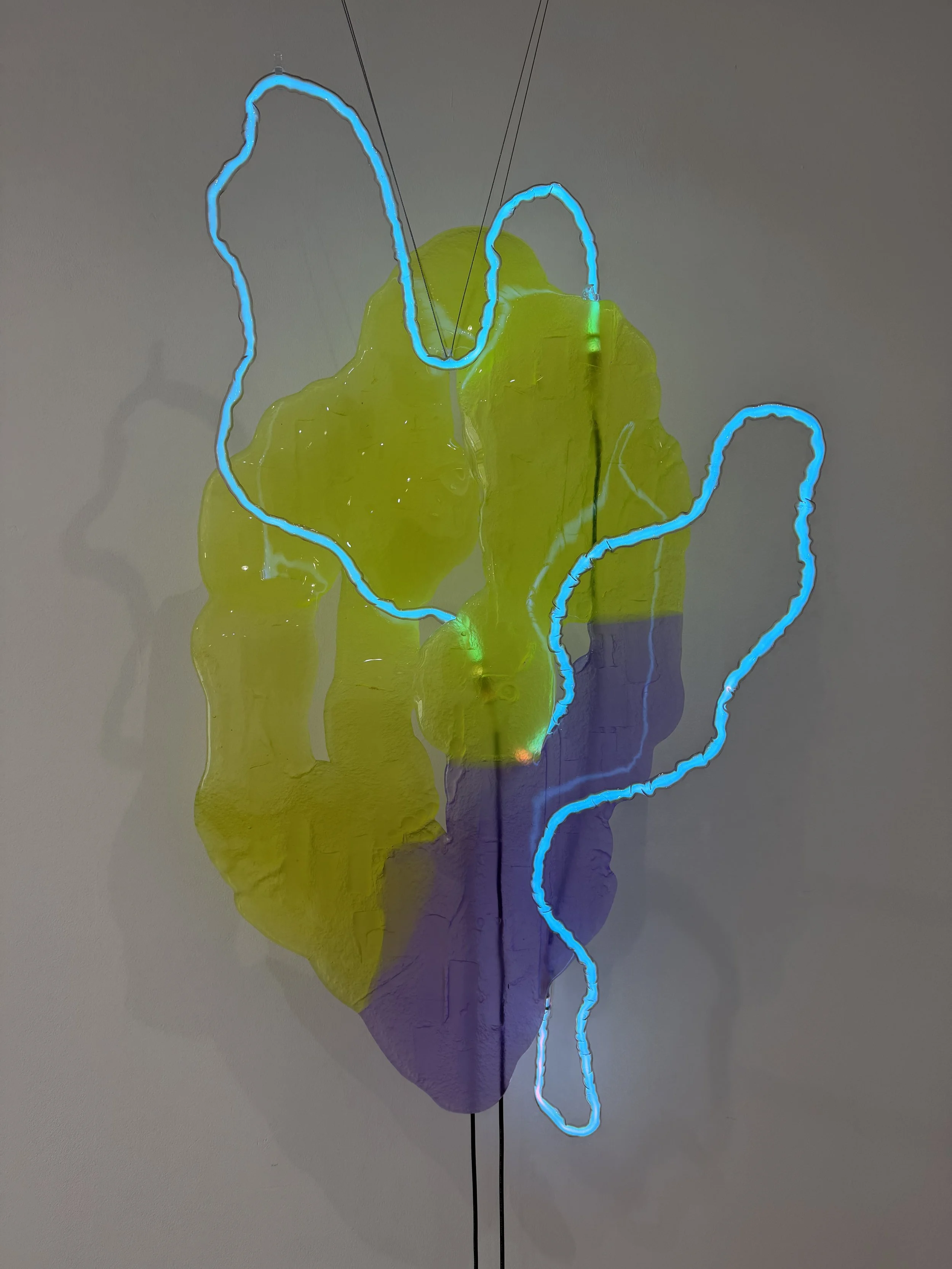
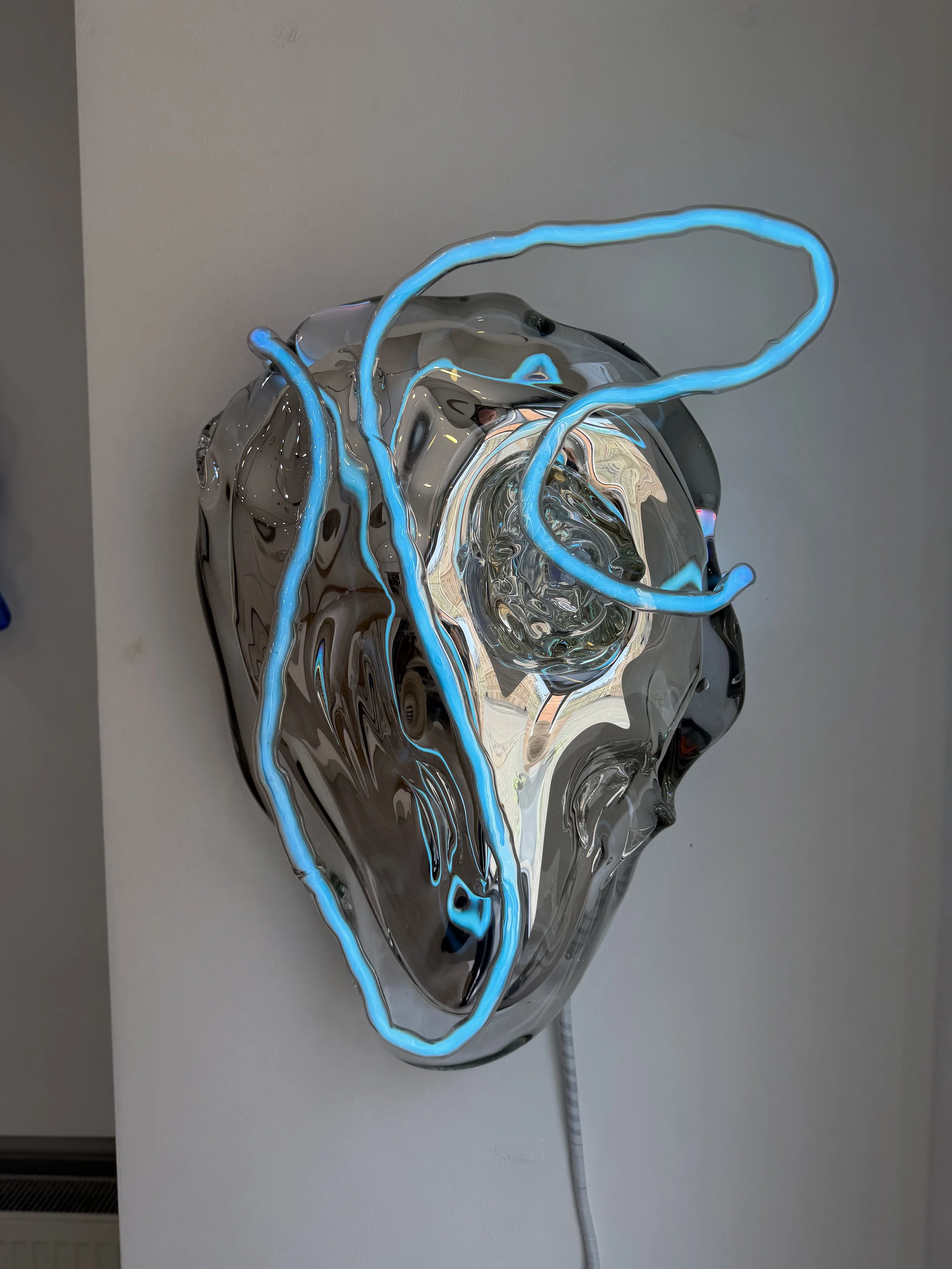
Across the exhibition, two kinds of change meet. One remains in the glass as a record of its formation. The other continues through light, reflection and the viewer’s presence. The silver piece makes this relationship especially vivid: its form holds the past, while its surface keeps receiving the present.
All photographs by the author.