
Reflections on four glass sculptures at Resonare, Nedbalka.
Exhibition view of Resonare by Asot Haas, Nedbalka, Bratislava, 2026.
Geometry usually gives us something dependable: a clear outline, a repeated pattern, a structure we can understand. In the four glass sculptures that held my attention at Asot Haas’s Resonare, that sense of certainty gradually became less secure.
I visited the exhibition at Nedbalka in Bratislava shortly before it closed. Curated by Michal Stolárik, it ran from 17 June to 4 October 2026 and brought together works exploring light, movement and perception. Within this wider exhibition, I chose to spend time with glass.
What interested me was the way these sculptures complicated their own precision. Their edges were clearly defined, yet reflections made it difficult to judge where a pattern sat, how far it extended, or which shapes belonged to the object and which were their reflected repetitions. The mirrored plinths and the gallery’s blue light multiplied this effect, doubling each work and tinting everything I saw. The glass itself is clear and colourless; the gold and silver are set within it, while the blue belongs to the light of the room. The longer I looked, the harder it became to form one complete picture.
The two rounded works made this tension particularly tangible. Their smooth contours enclosed sharp, scattered shapes that radiated outward and suggested an explosion. I read them as images of energy held within a boundary. The golden work had a warmth that drew me closer; the silver one felt cooler and more remote. A similar visual language produced two quite different emotional responses.
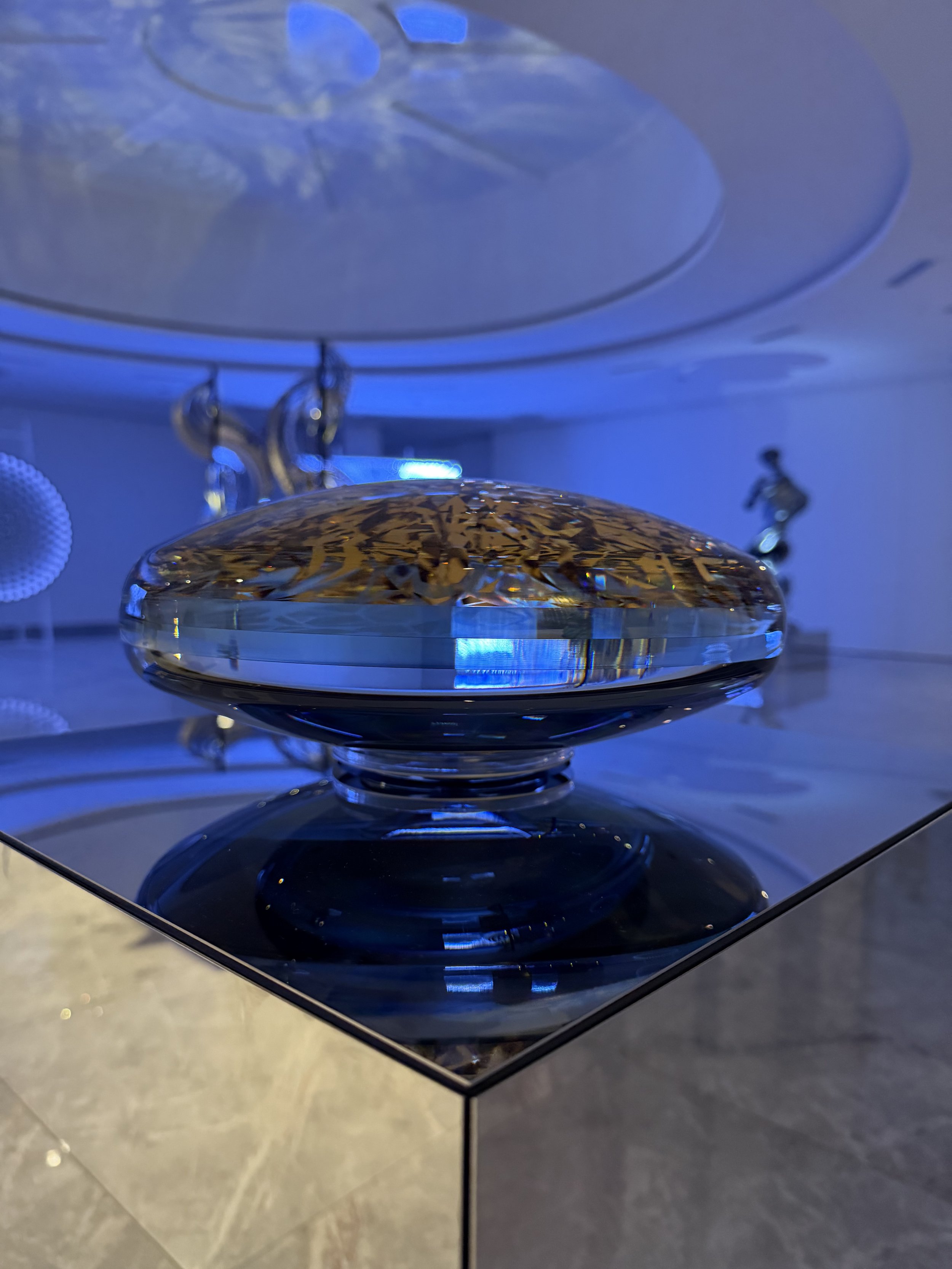
Gold-toned sculpture from the Diamonds series by Asot Haas, seen at Resonare, Nedbalka, 2026.
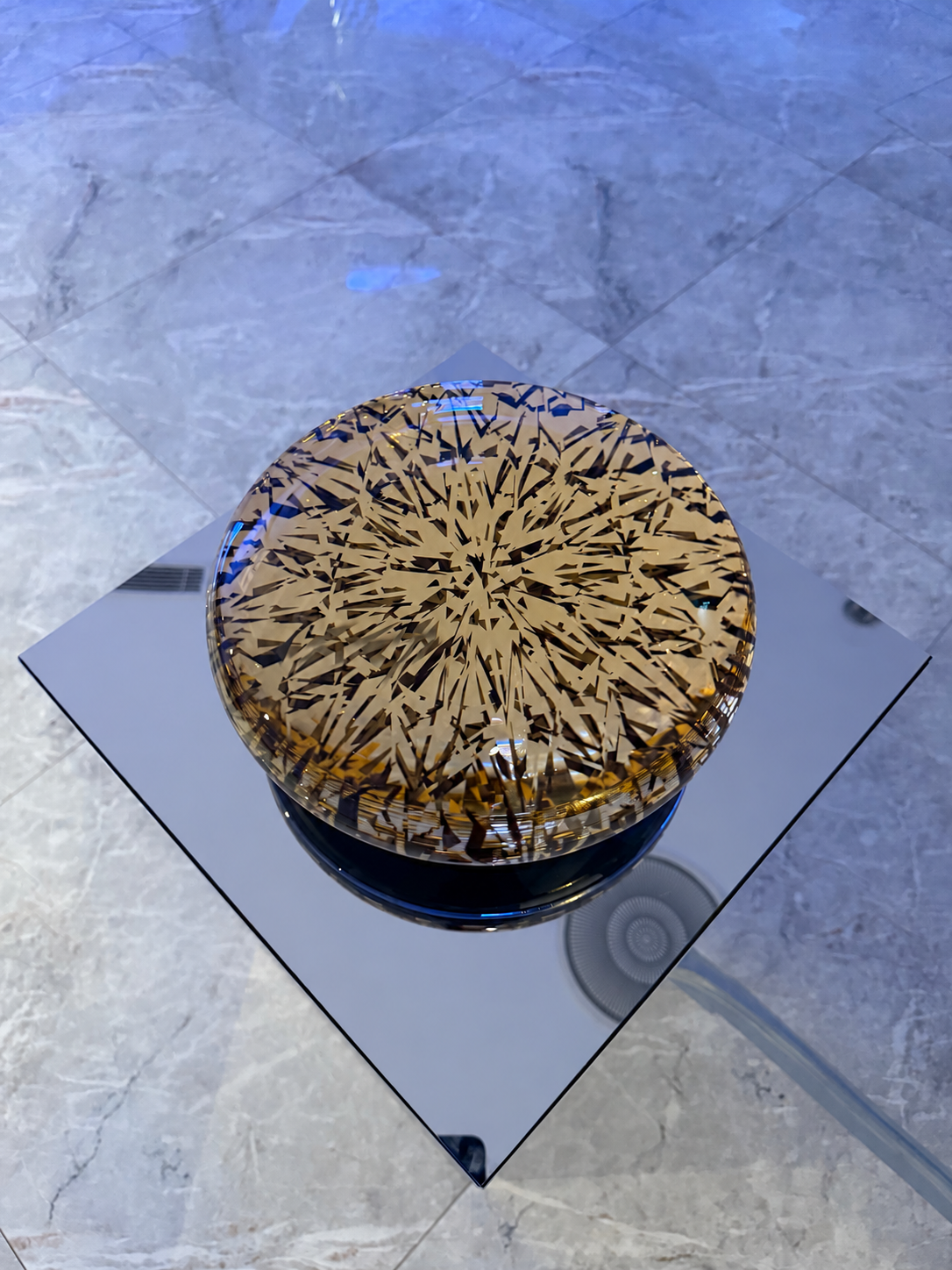
Gold-toned sculpture from the Diamonds series, seen from above.
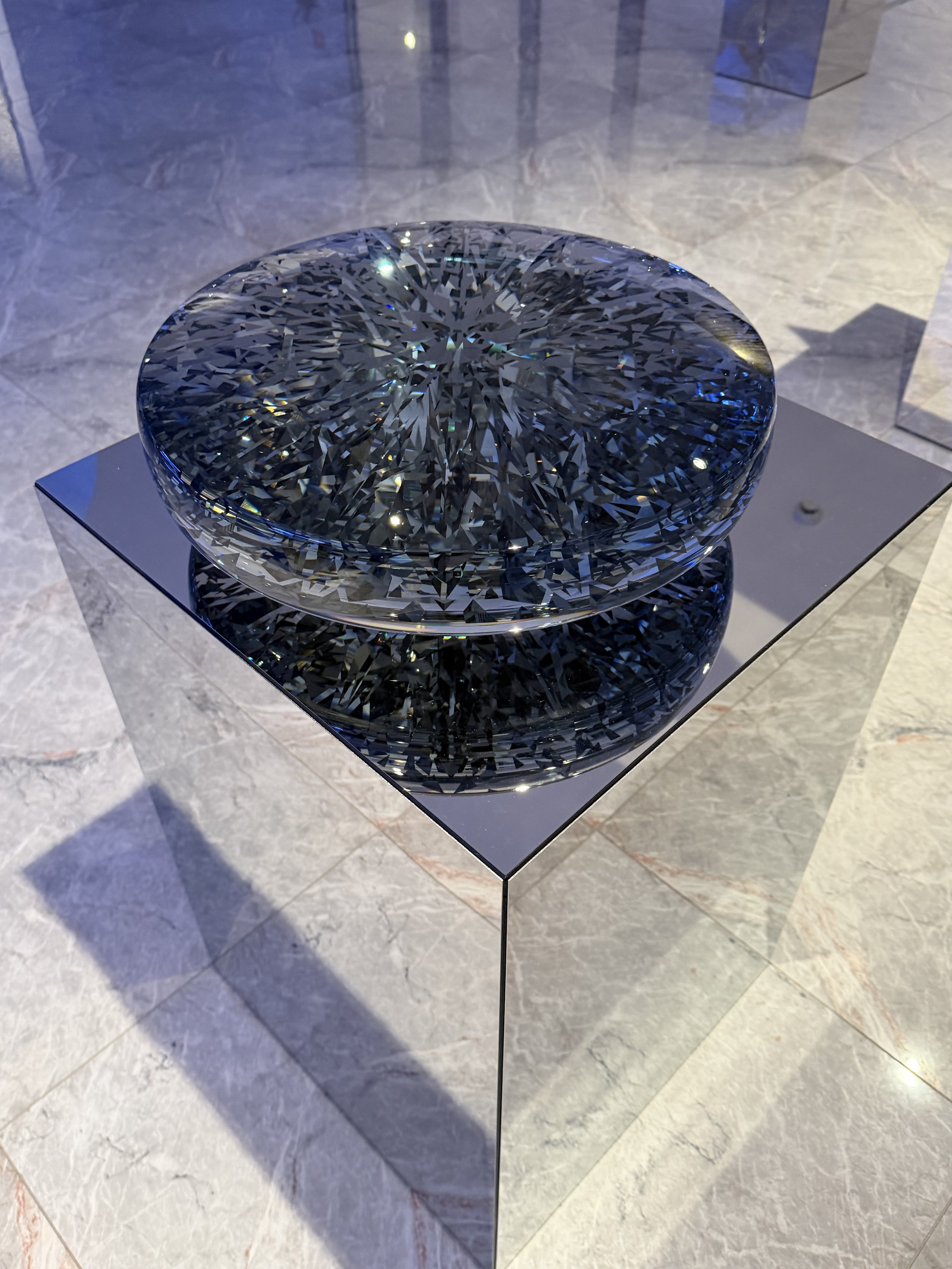
Silver-toned sculpture from the Diamonds series.
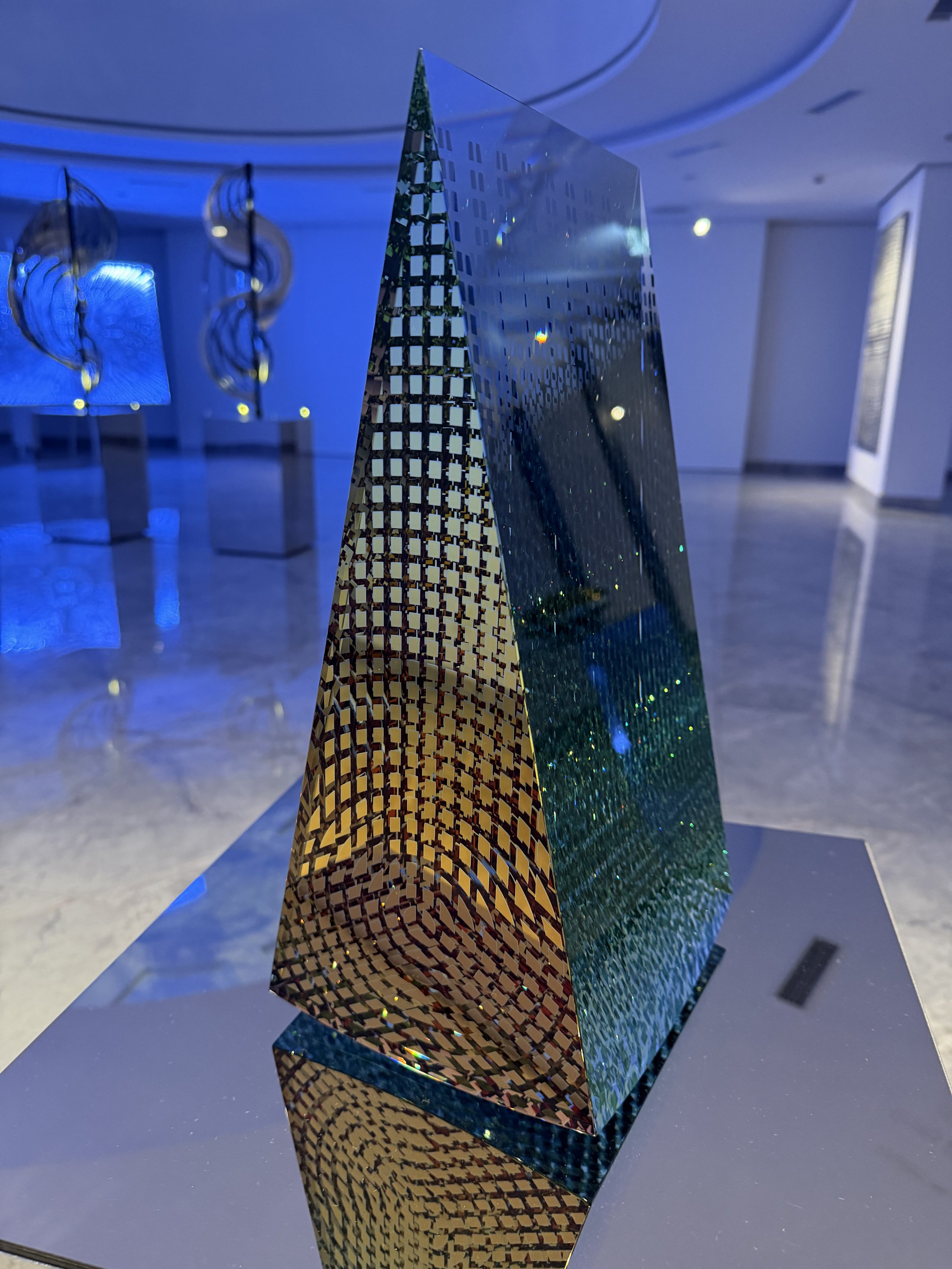
In the single tapering sculpture, repeated rectangular marks suggested an orderly grid. Yet that grid seemed to bend and recede, giving the impression of a space much deeper than the object’s dimensions allowed. As I moved around it, its faces shifted between cool reflected light and warm gold. I found this compelling: the very repetition that helped me recognise a structure also made its depth difficult to judge.
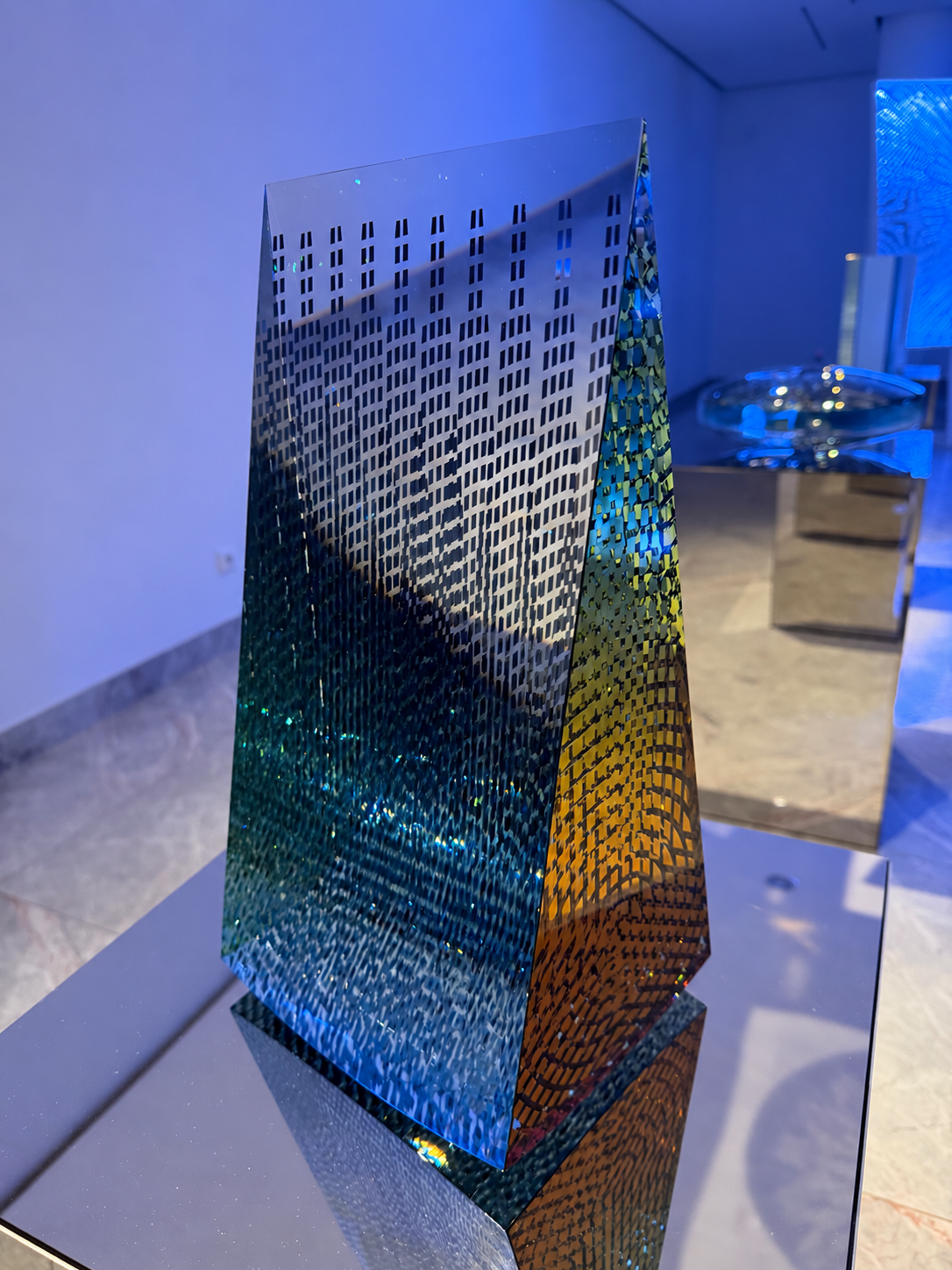
Tapering sculpture.
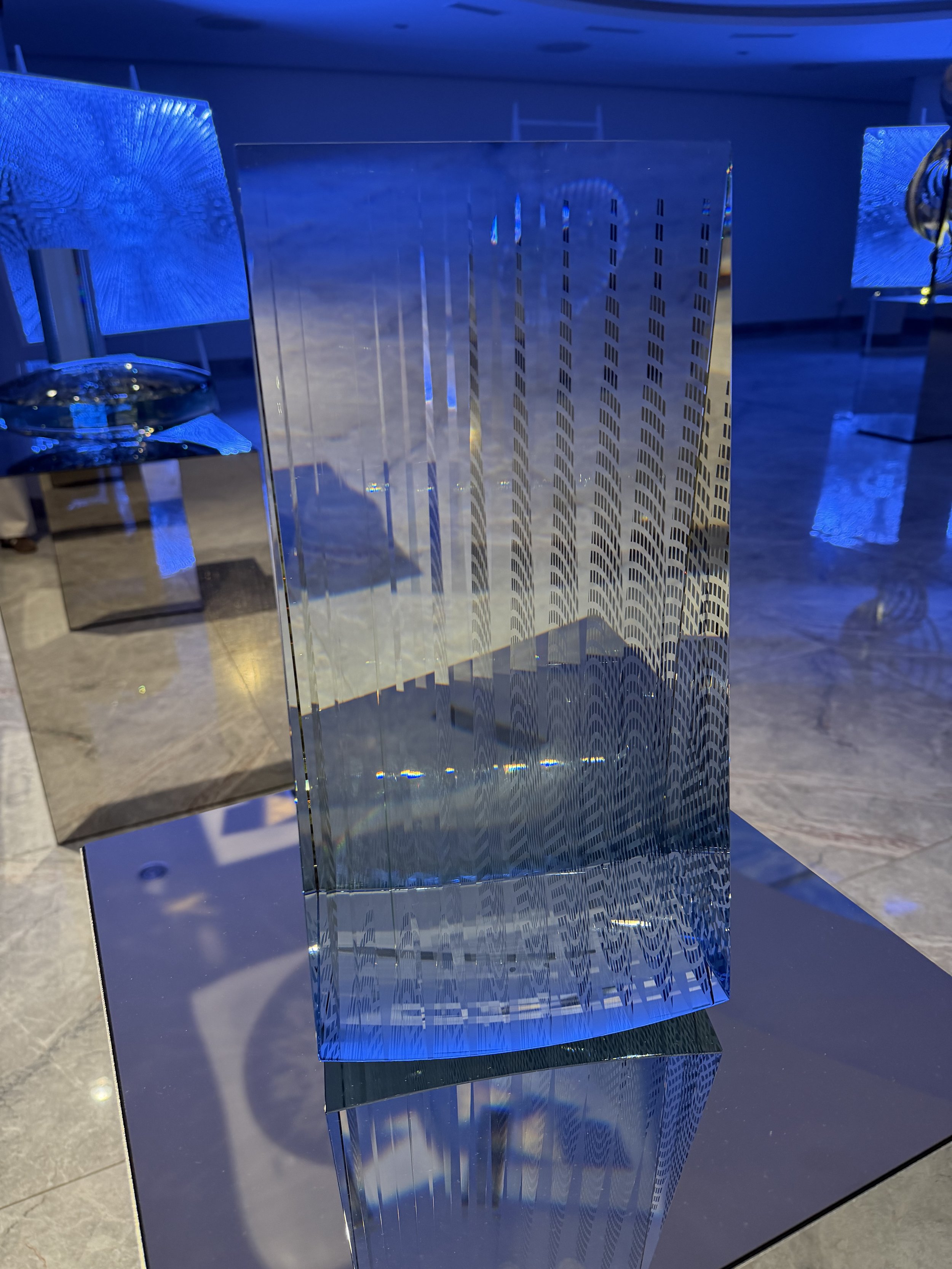
Tapering sculpture, another view.
The paired triangular prisms brought the same question into the space between two forms. Their upright silhouettes suggested stability, while the multiplying triangles within them, reminiscent of a Sierpiński triangle, unsettled that first impression. Looking from above and then from the side, I could recognise the same objects without feeling that either view explained them fully.
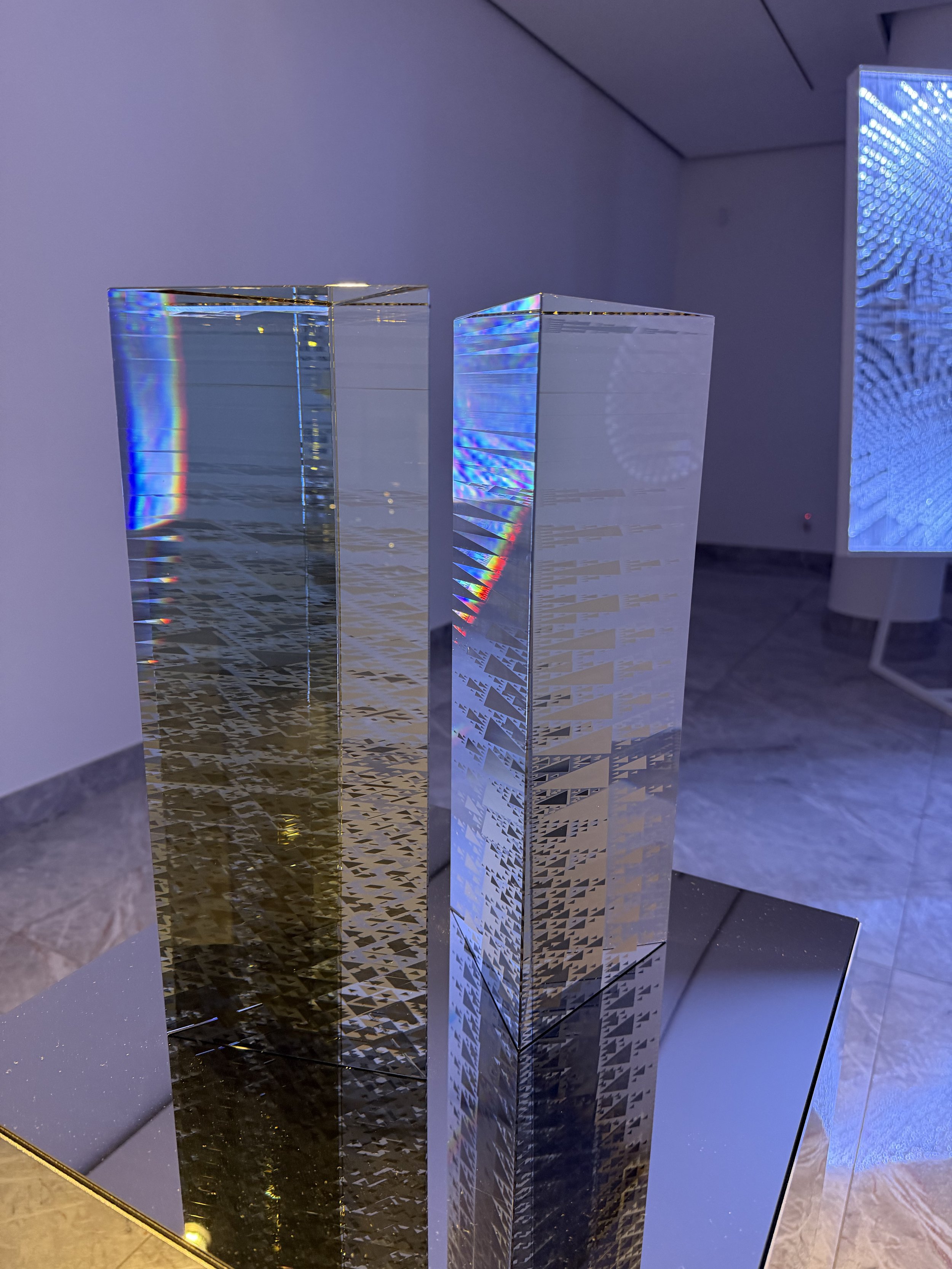
Paired prisms, from the side.
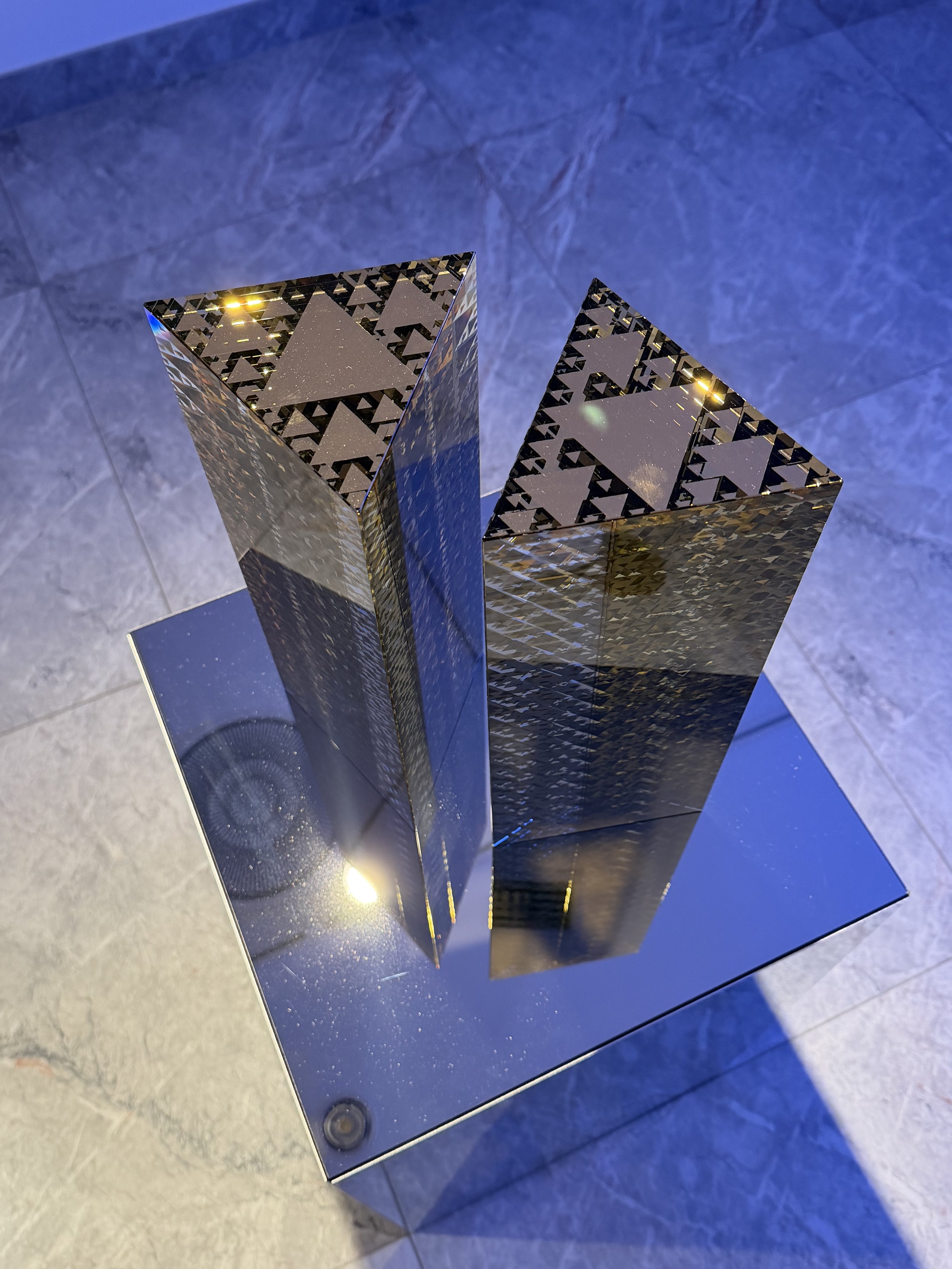
Paired prisms, from above.
For me, glass was central to this experience. Its transparency offered access to the sculptures’ interiors, while its reflective qualities made that access incomplete. Seeing more did not necessarily mean understanding more.
That is what gave these works their force. Their geometric order was convincing enough to invite trust, but the visual experience kept questioning it. I left thinking about how readily we treat a clear first impression as a complete understanding, and how these sculptures quietly exposed the gap between the two.
All photographs by the author.