
The Venice Glass Week 2026: A Curatorial View
A personal route through The Venice Glass Week HUB by Generali and The Venice Glass Week HUB Under35, centred on the works that continued to resonate after the visit.
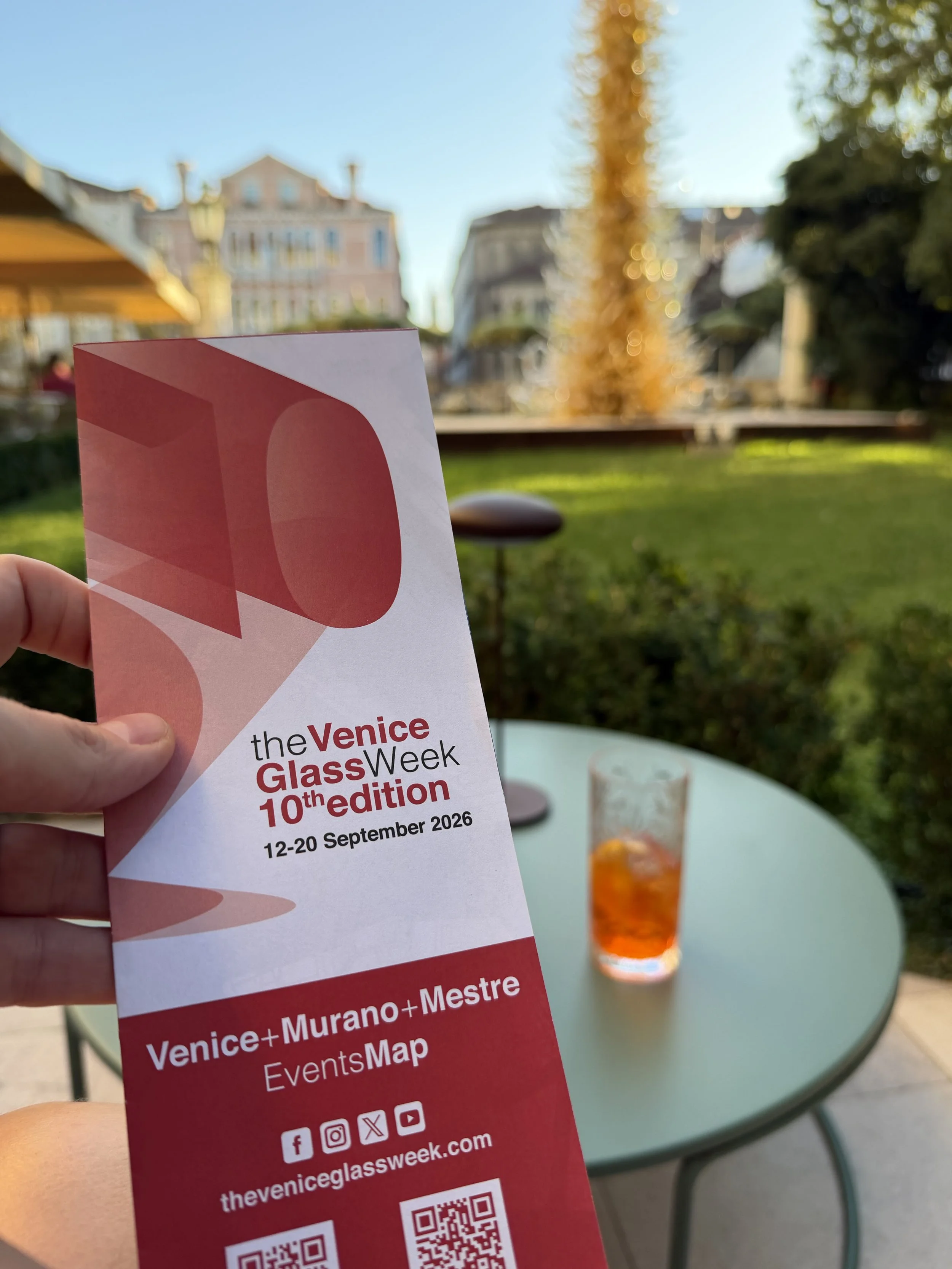
The Venice Glass Week, tenth edition, Venice, September 2026.
Venice through glass
During The Venice Glass Week, glass does not feel confined to exhibition rooms. It appears in the city’s reflections, its changing water, its architecture and its long relationship with making. Moving through Venice between exhibitions, I became especially aware of how naturally the material belongs here, while also seeing how far contemporary artists continue to push it beyond tradition.
The tenth edition of the festival, held from 12 to 20 September 2026, brought together more than 200 events across Venice, Murano and Mestre. My visit centred on its two principal group exhibitions: The Venice Glass Week HUB by Generali at Palazzo Morosini, presenting established and mid-career artists, and The Venice Glass Week HUB Under35 at Fondazione Bevilacqua La Masa, dedicated to a younger international generation. Rather than attempting a comprehensive survey, this is a personal selection of works that held my attention and continued to unfold after I had left them.
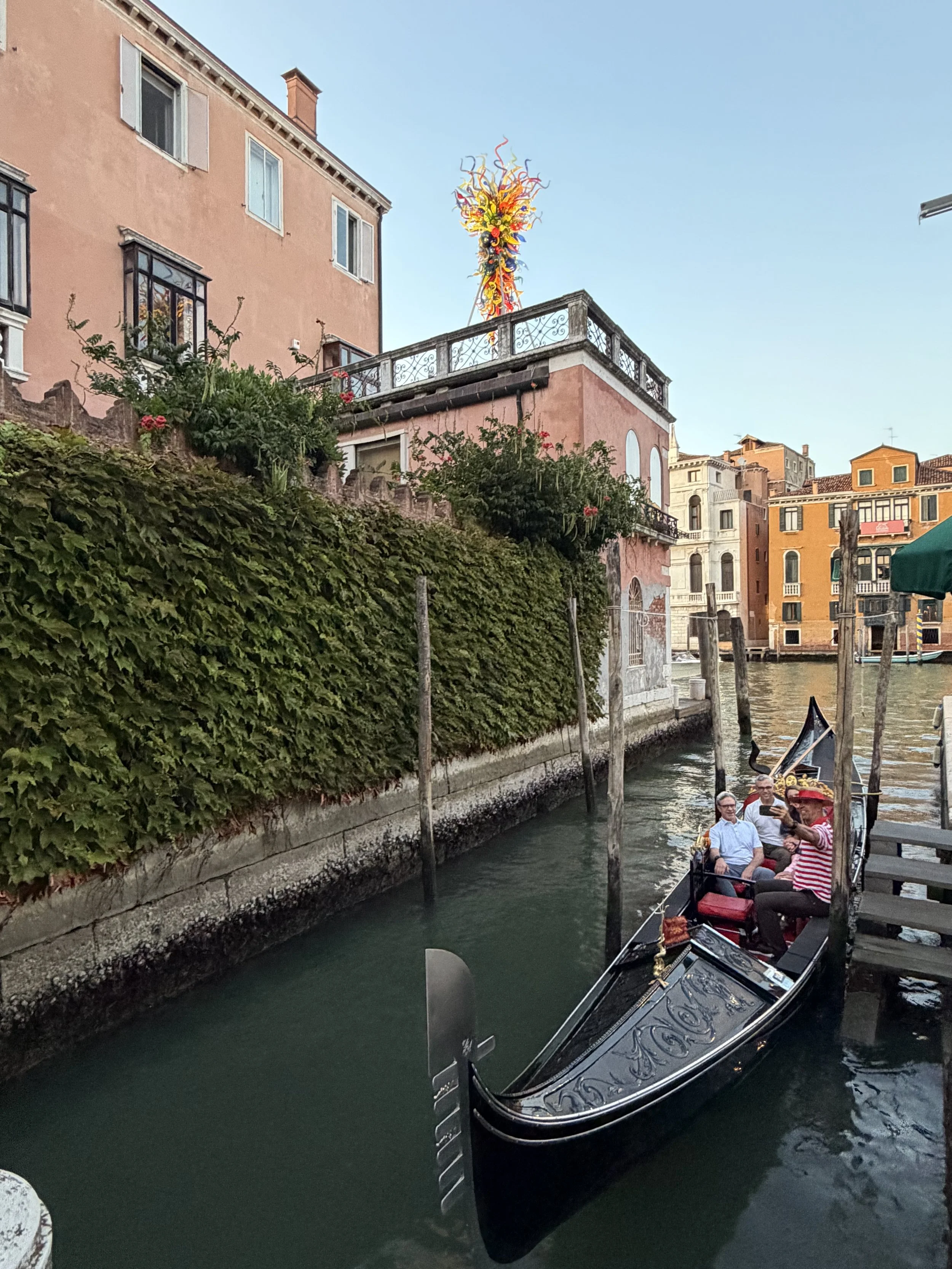
Venice during The Venice Glass Week 2026.
The Venice Glass Week HUB by Generali
At Palazzo Morosini, the historic rooms and filtered Venetian light gave the exhibition an unusually intimate rhythm. Fifty artists were represented, yet the setting allowed individual works to retain space around them. The pieces that drew me most strongly shared a sense of internal tension: forms that appeared quiet at first, but became less stable and more complex the longer I looked.
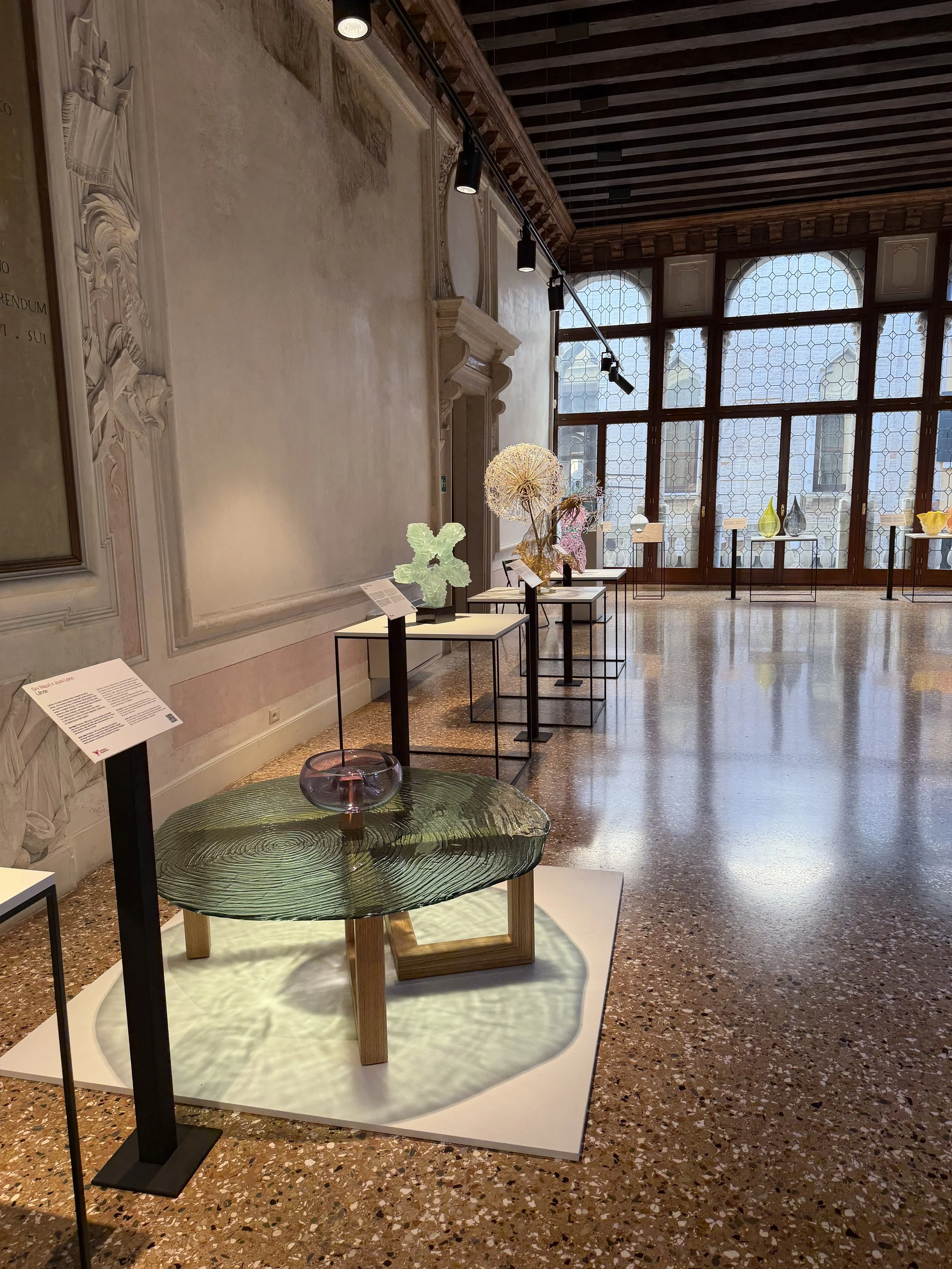
Installation view, The Venice Glass Week HUB by Generali, Palazzo Morosini.
Michela Cattai’s Frequency of Form was one of the first works to stop me. Its pale, undulating surface felt bodily without becoming figurative: from one angle it suggested a torso, from another a fragment shaped by pressure or erosion. What attracted me was the restraint of the piece. The glass did not rely on brilliance or transparency; instead, it seemed to hold the light within its folds, making the form feel both solid and strangely weightless.
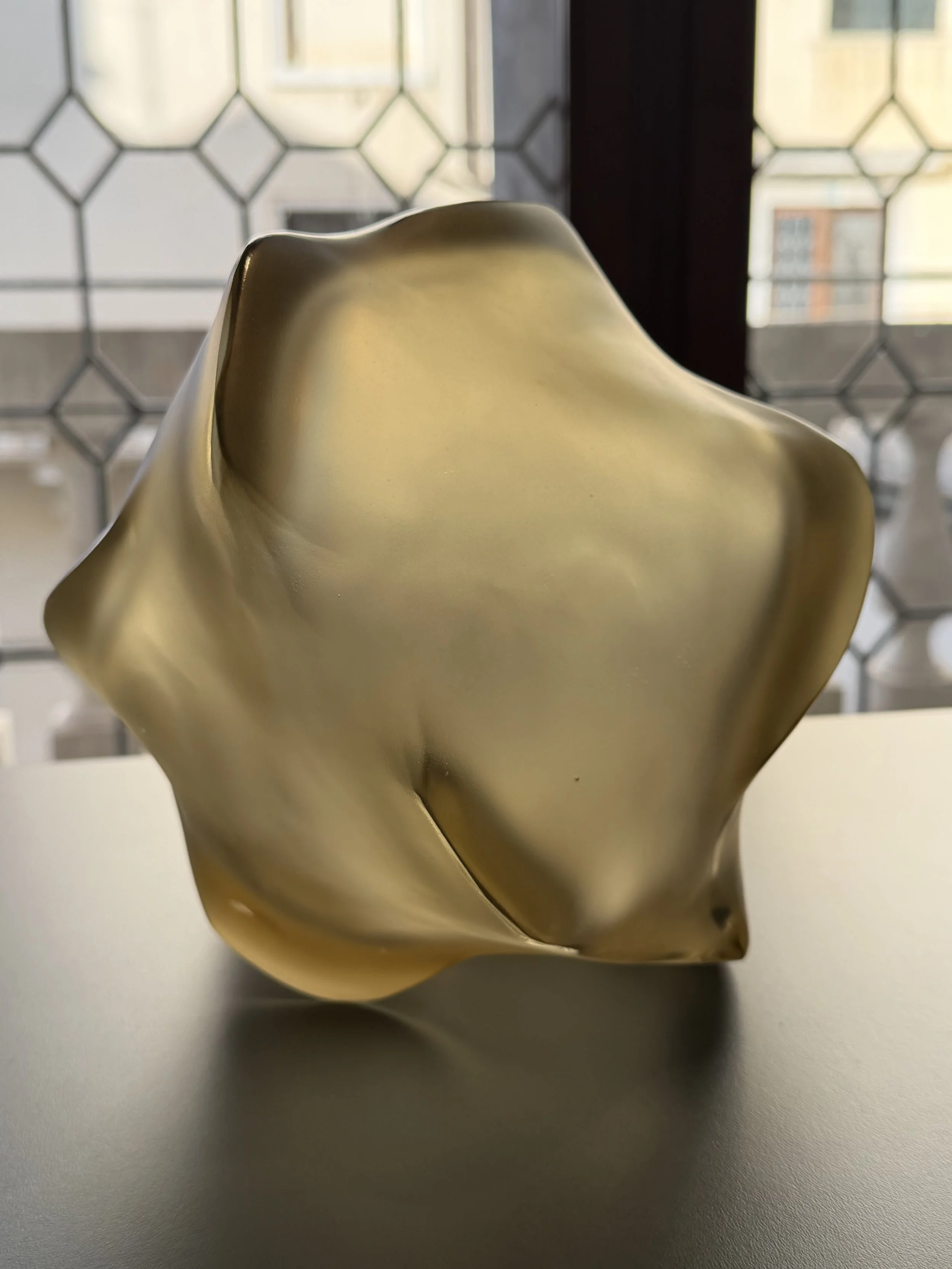
Michela Cattai, Frequency of Form.
Kasia Bulka Matlacz’s Polaris offered a contrasting kind of construction. Made from glass fragments that gather into a cohesive, almost ethereal structure, it seemed to shift between a star, a cellular formation and an unfamiliar organism. The frosted surfaces soften the individual elements, while the sharply defined shadow makes the sculpture appear to extend beyond its own body. What held me was not its resemblance to any single thing, but the way repetition turns fragments into a point of orientation - an apt echo of the Pole Star that inspired the work.
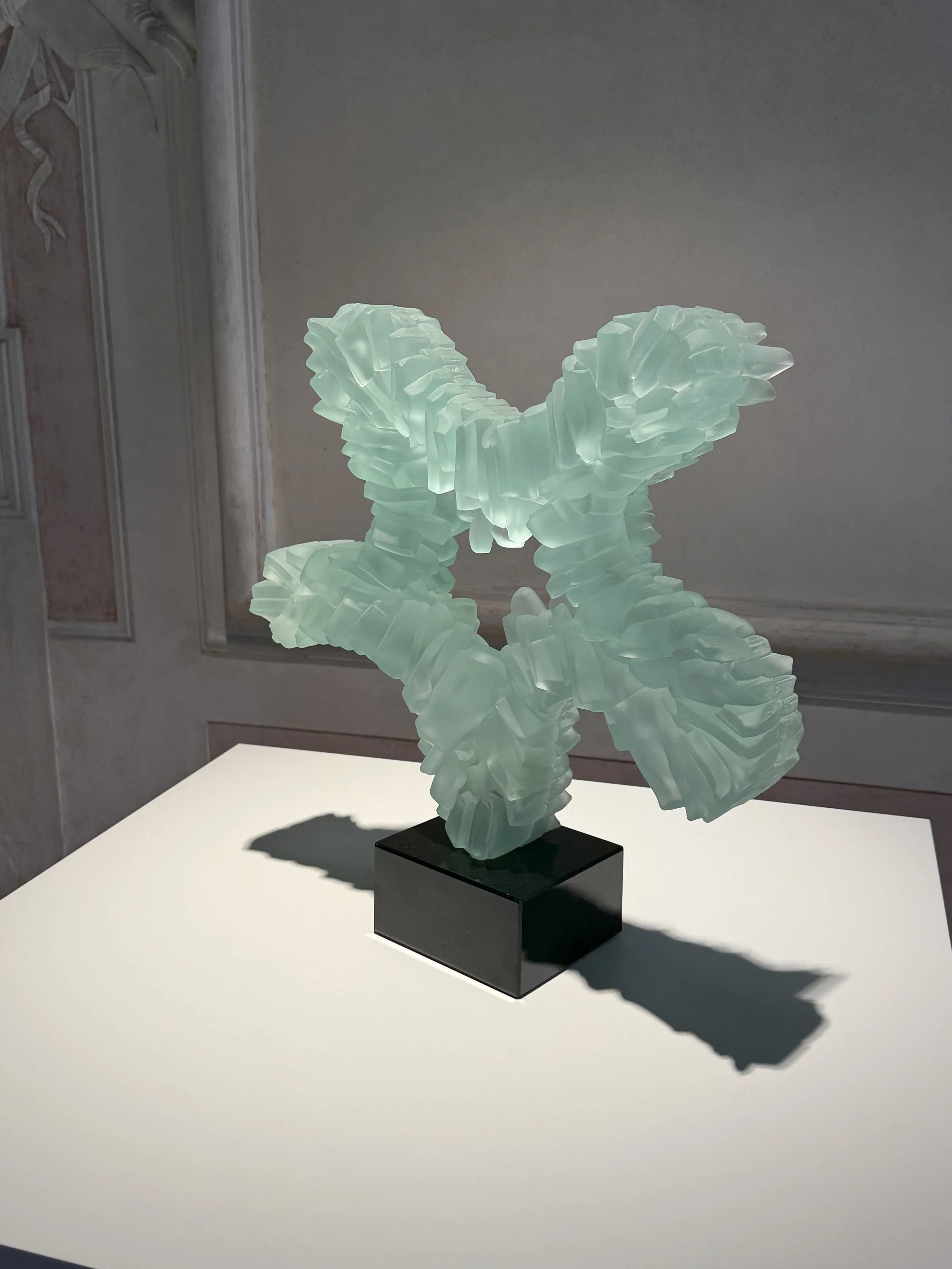
Kasia Bulka Matlacz, Polaris.
Peter Bowles’s Quiescent Object: Kepler-24d produced a different kind of stillness. Its compact cylindrical form is precise and self-contained, but the concentric bands of colour create an optical depth that seems to extend far beyond the object’s physical scale. Lilac, blue and white shift almost imperceptibly, giving the impression of looking into an atmosphere rather than at a surface. I had previously selected another work from the series, Quiescent Object: Kepler-186F, for a House of Glass Curatorial Note, so encountering Kepler-24d in Venice felt like seeing that visual language develop in another register. Meeting Peter Bowles in Venice also gave this connection a welcome personal dimension.
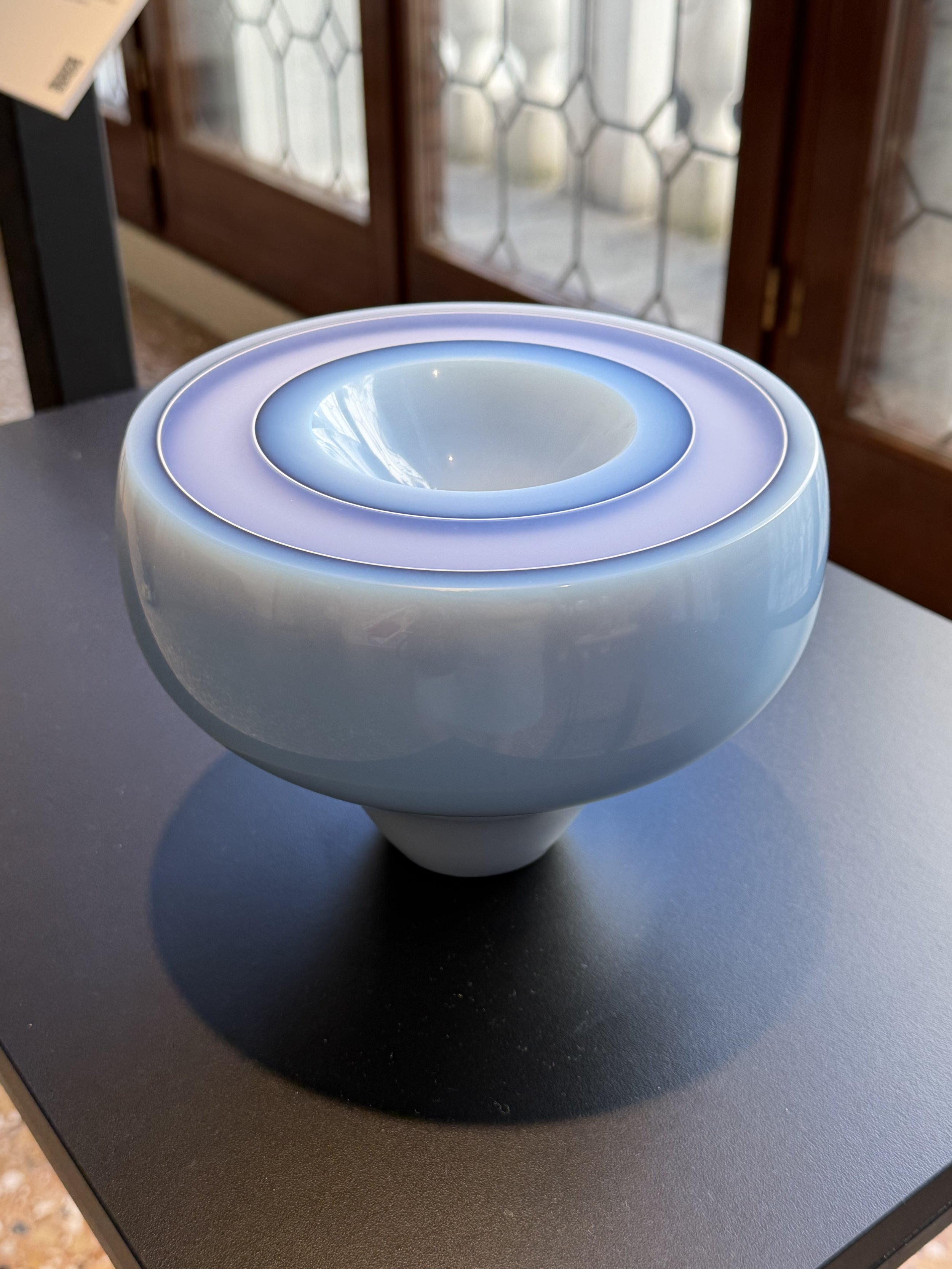
Peter Bowles, Quiescent Object: Kepler-24d. Phosphate opal glass.
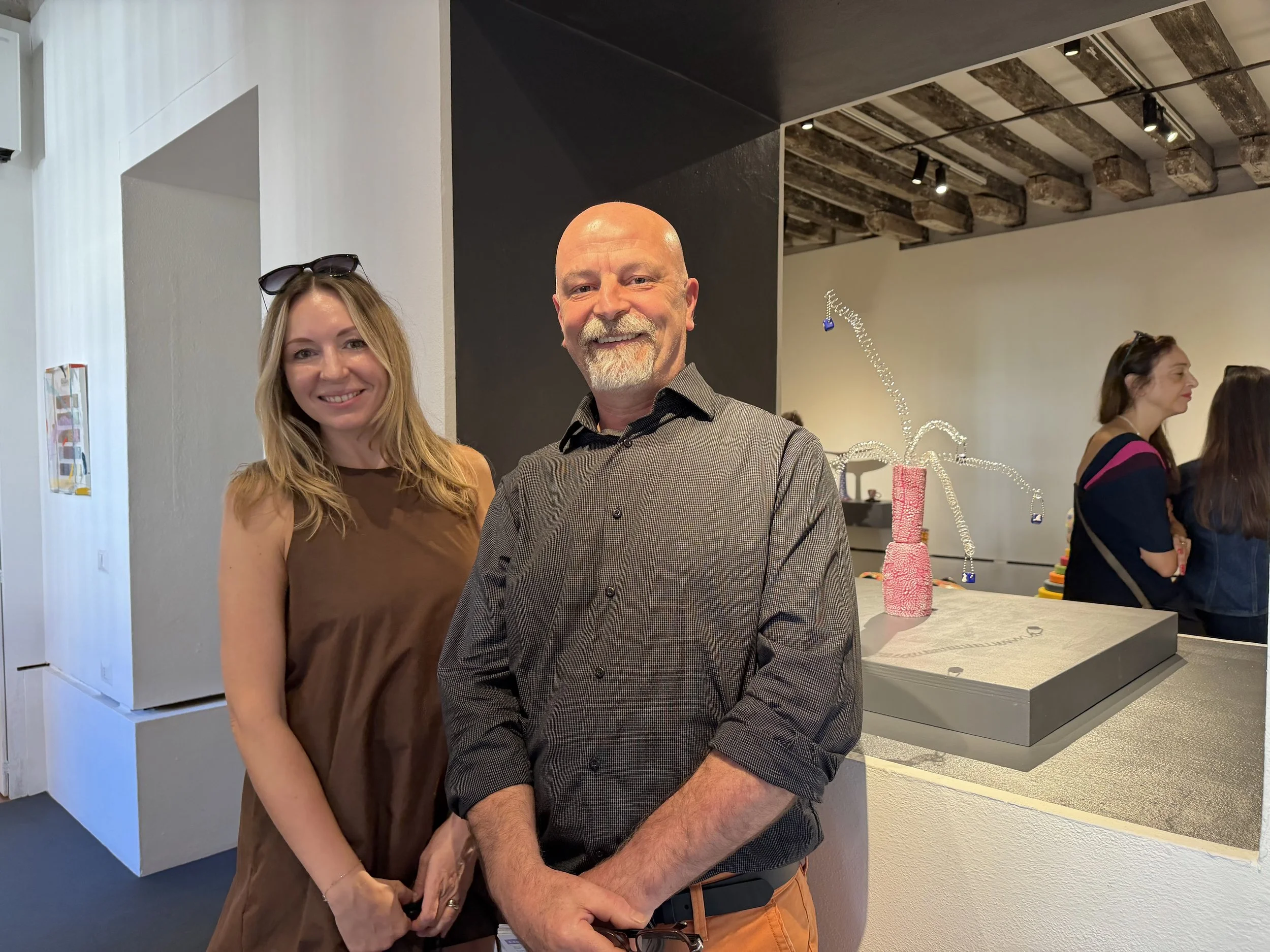
With Peter Bowles in Venice during The Venice Glass Week 2026.
Lukáš Novák’s Savage Garden shifted the mood again. Its dark violet body, jagged contours and dense internal layers made it feel less like a finished object than matter caught in the act of becoming. I was drawn to the way the work preserves pressure, sedimentation and growth as visible events. There is beauty here, but it is not polished into reassurance; the piece remains mineral, organic and slightly unruly.
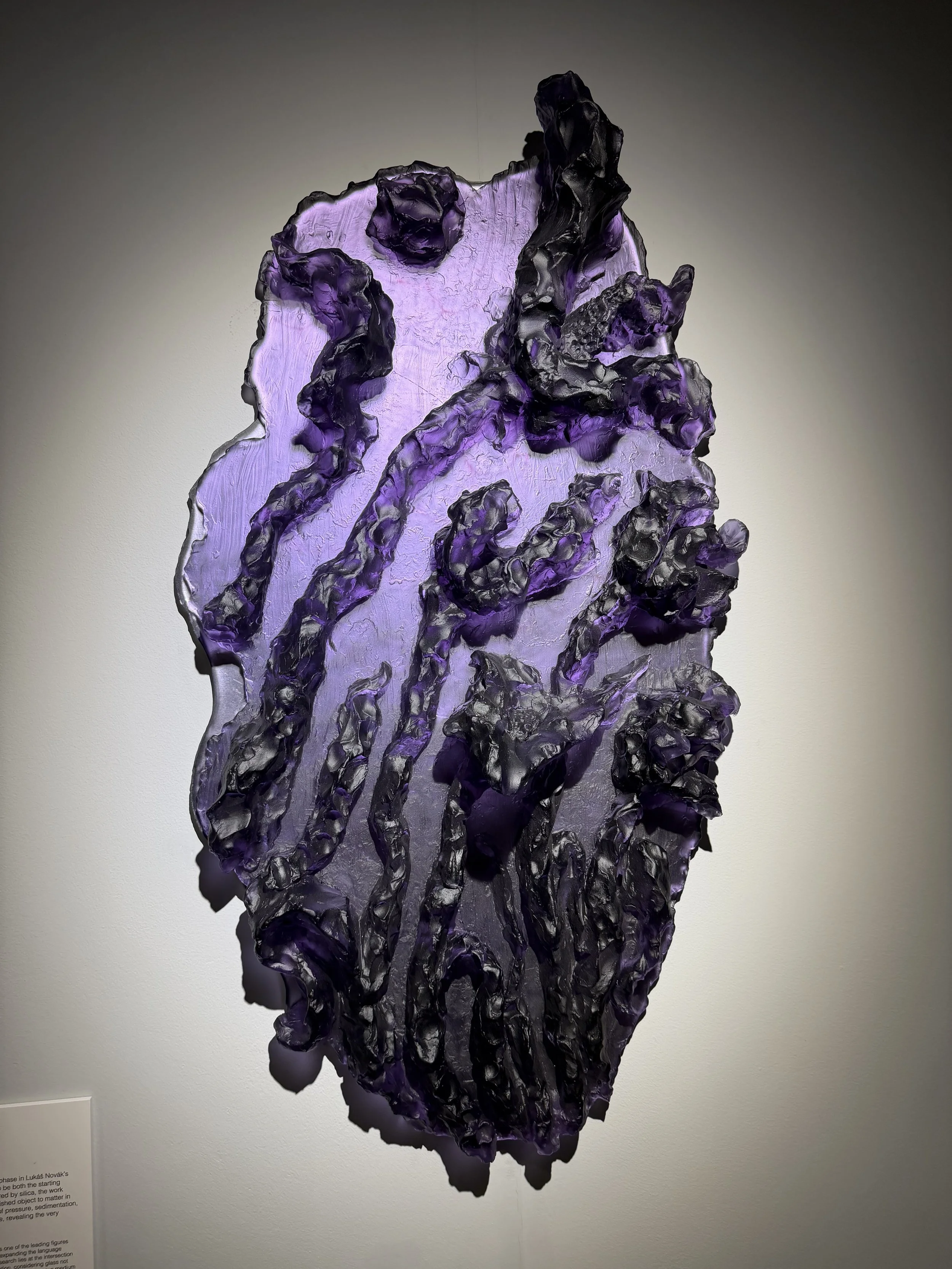
Lukáš Novák, Savage Garden.
The Venice Glass Week HUB Under35
The atmosphere changed at the HUB Under35 in the Galleria di Piazza San Marco. With 39 international artists presenting 52 works, the exhibition felt more exploratory and experimental: ideas remained visible as part of the finished works, and glass moved freely between sculpture, installation, design and conceptual practice. What interested me most was not novelty for its own sake, but the confidence with which familiar qualities of glass - transparency, fragility, colour and reflection - were redirected.
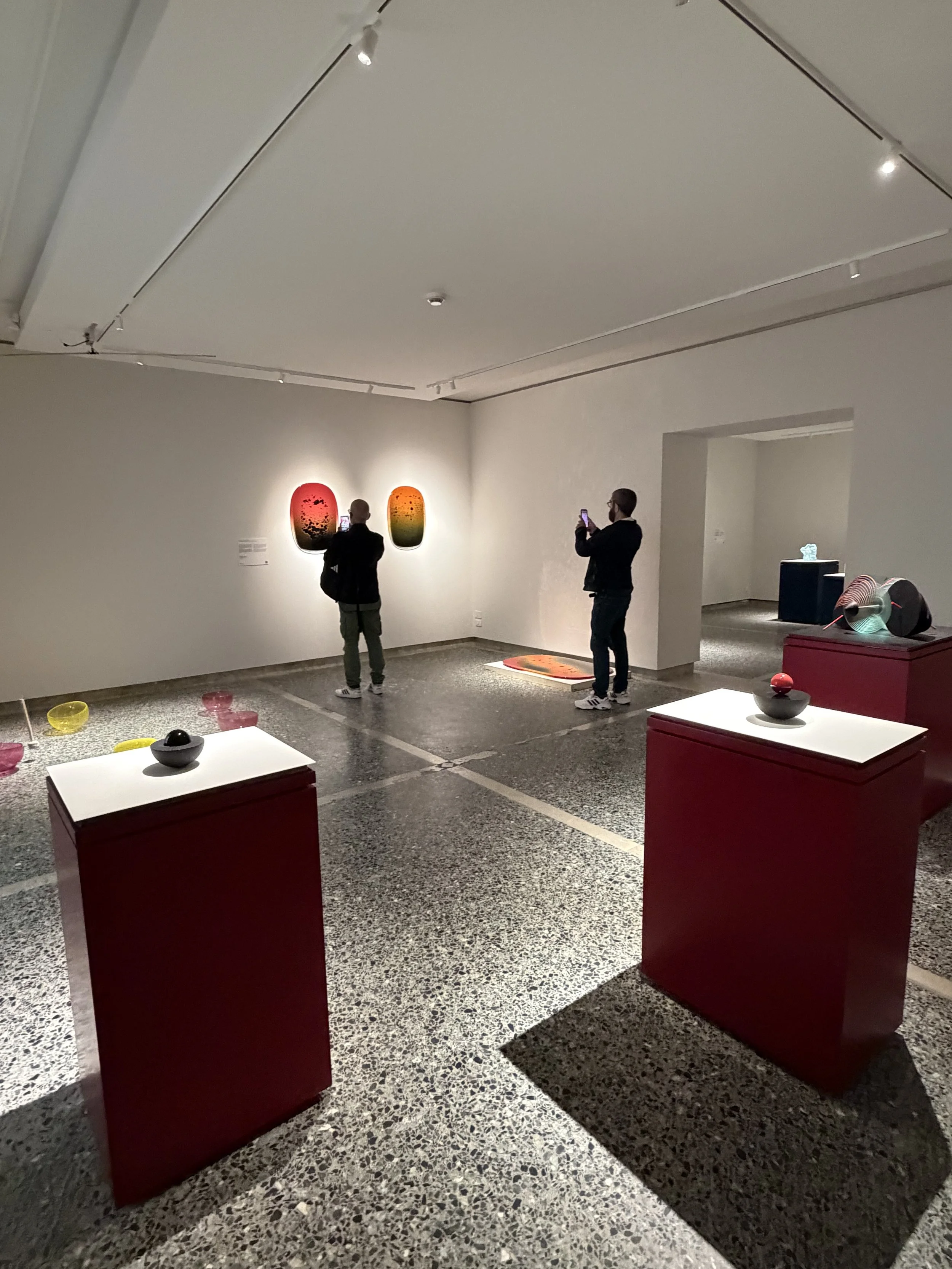
Installation view, The Venice Glass Week HUB Under35, Fondazione Bevilacqua La Masa.
Erica Tung’s Moonlight created one of the quietest encounters in the exhibition. Blue gathers at the base of the cylindrical form and gradually dissolves into a milky translucency, while minute bubbles give the glass an atmospheric depth. The transition between wheel-thrown porcelain and cast glass is handled with such restraint that the object feels less assembled than condensed. Its effect depends on slow looking: the complexity does not announce itself, but appears as the eye adjusts to subtle changes in colour, texture and light.
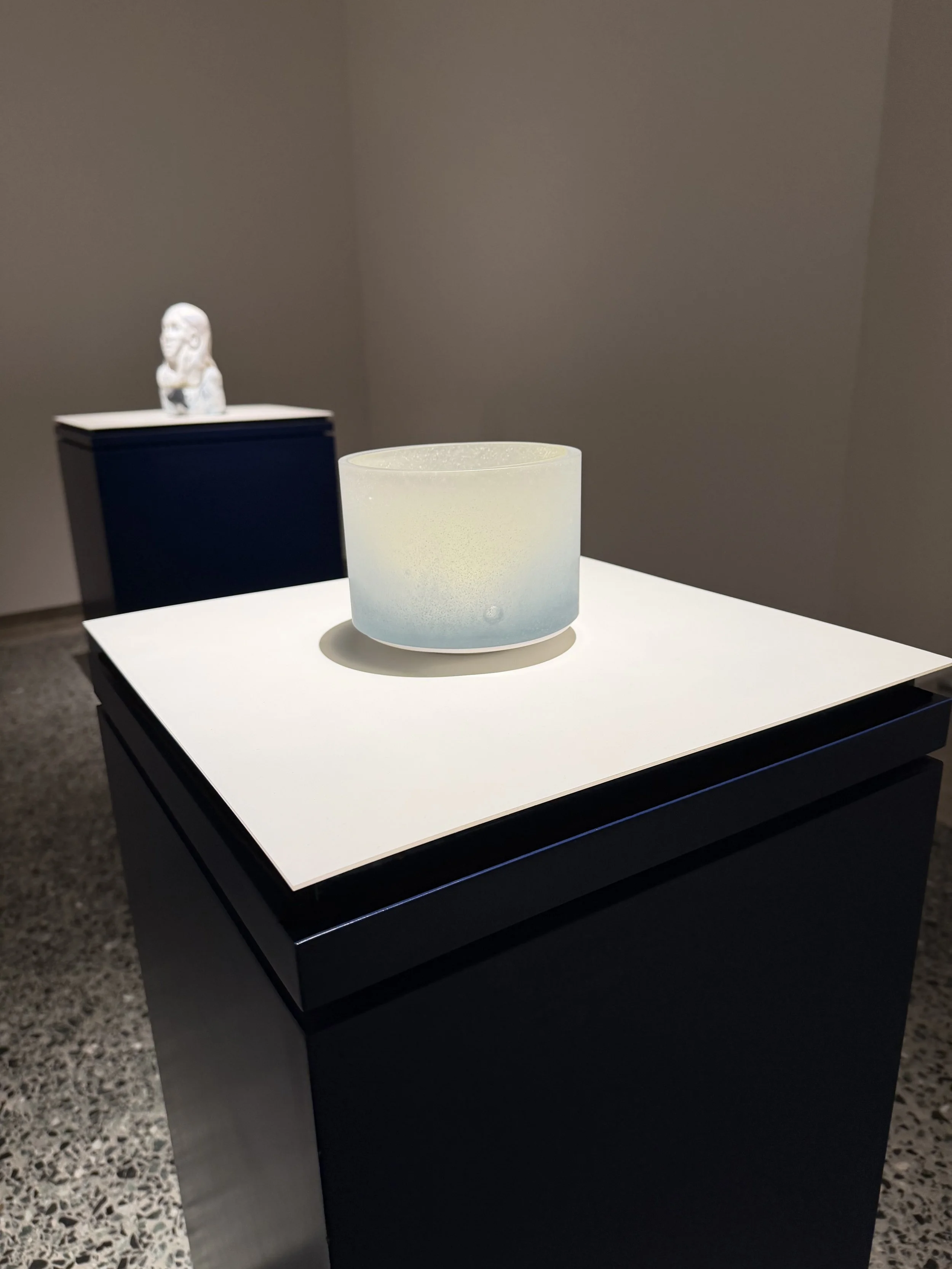
Erica Tung, Moonlight. Lost-wax cast glass and wheel-thrown porcelain, hand-sanded and polished.
Elsewhere, colour took on a more physical presence. Katarzyna Pilch’s Feel first caught my eye through the lilac light spreading across its plinth: the low, rippling form seemed to extend beyond the glass itself. Behind it, Warmth rose in yellow, drawing my gaze upward. I found myself looking between the two works, at colour pooling beneath one and held within the vertical form of the other. Presented together as part of Memory of Water, they made the relationship between glass and light feel immediate and almost tactile.
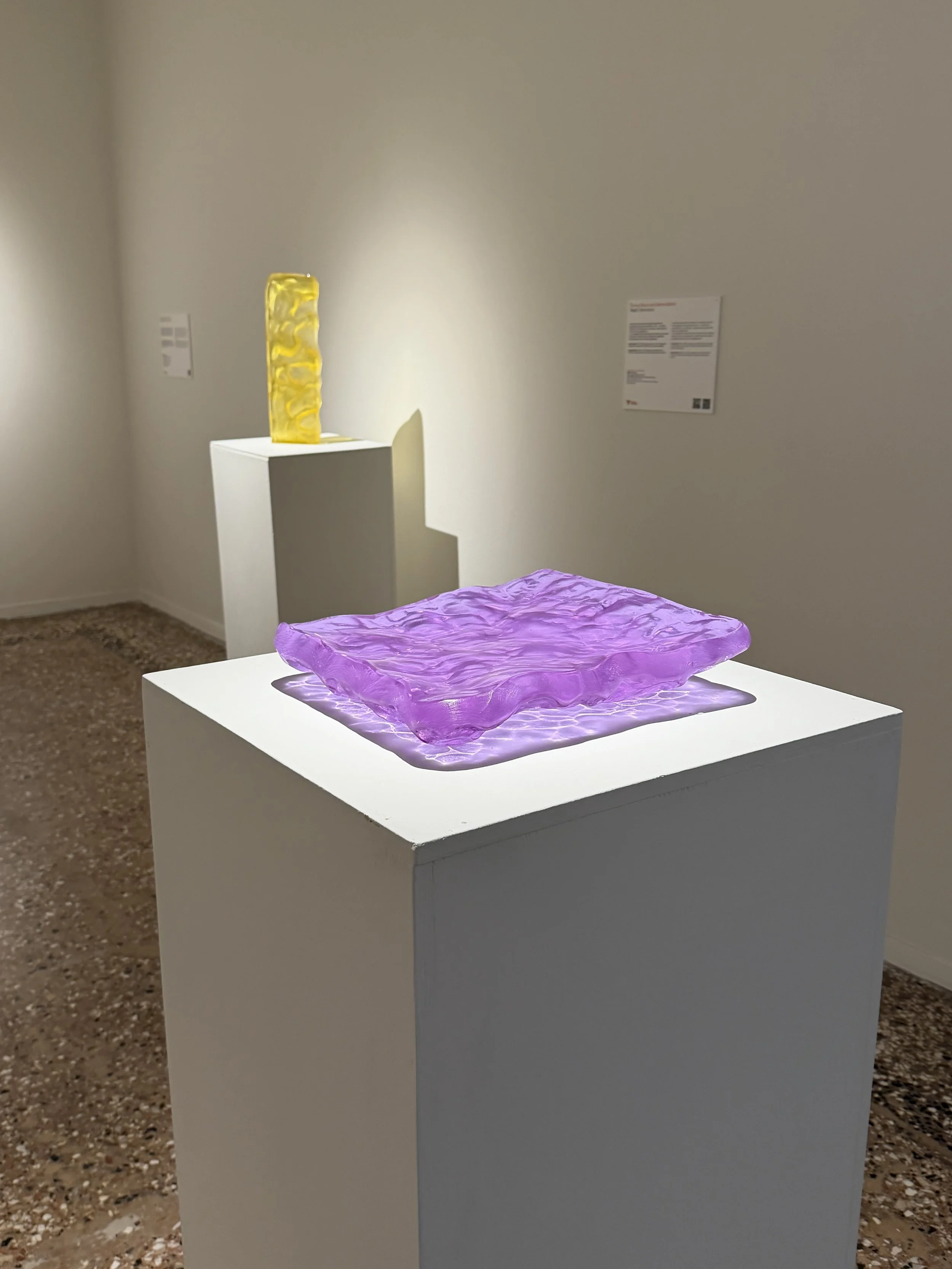
Katarzyna Pilch, Feel (foreground) and Warmth (background), from Memory of Water (FEEL • TRUST • FLOW).
France Chappuis’s The Point achieved remarkable intensity with very little. A red sphere appears to hover above a dense black bowl, creating a composition that is geometrically simple but psychologically charged. Its force lies in that exact balance: the sphere feels held and threatened at the same time, while the polished upper surface turns the black form into a reflective void. The work has the concentration of a small ritual object, yet it avoids illustration and leaves its symbolism open.
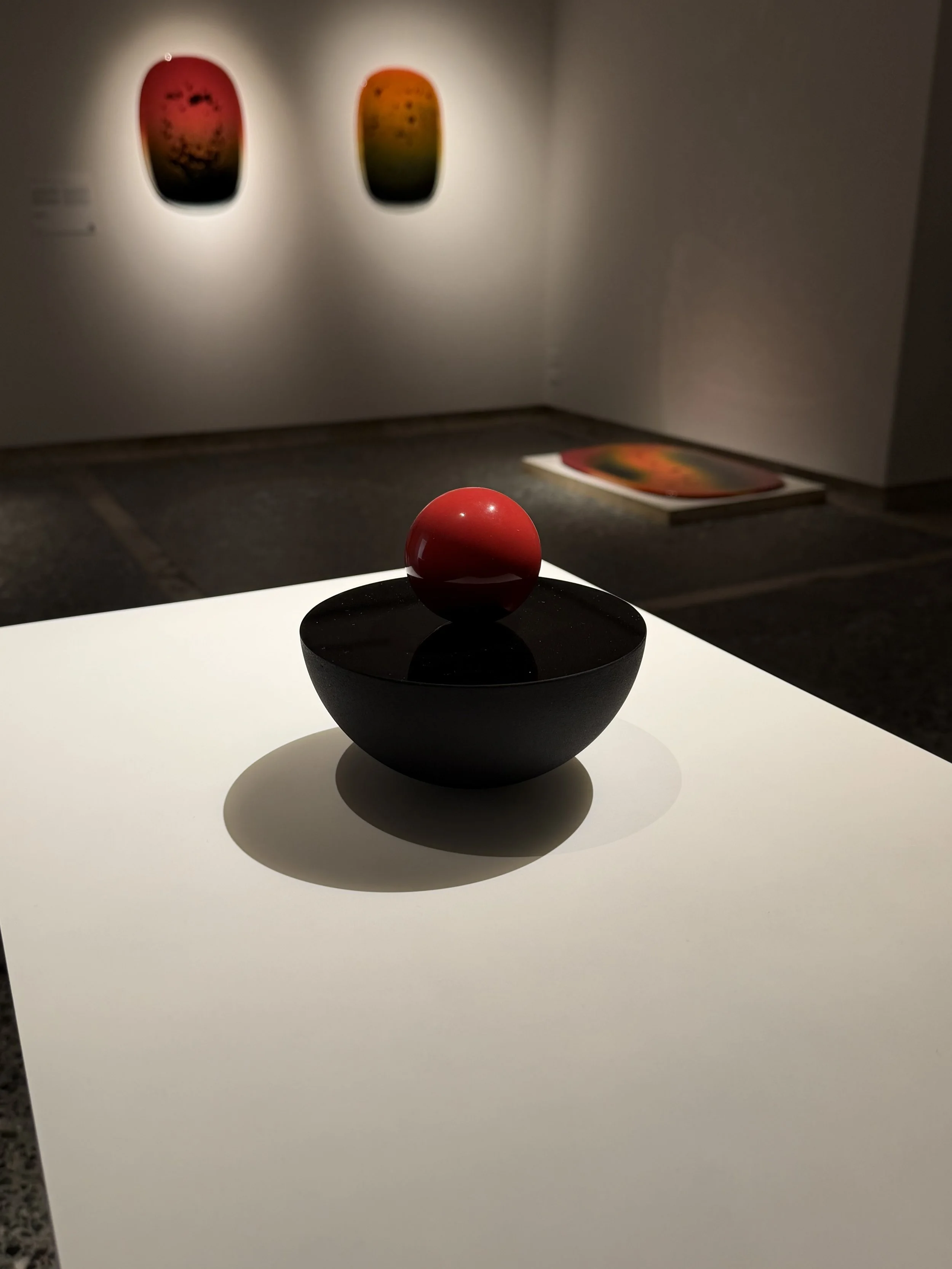
France Chappuis, The Point. Kiln-cast crystal and glass.
Boldizsár Lukácsi’s Crystal Charge drew me in through precision. The laminated, hand-sculpted glass rises in a sequence of folded planes, each edge directing light into the next. From a distance the sculpture looks almost architectural; close up, the subtle grey transitions make it softer and more atmospheric. Its strength lies in this tension between strict construction and optical movement. The work feels disciplined rather than decorative, yet it never becomes cold. Lukácsi subsequently received the 2026 Premio The Studio - Corning Museum of Glass for Crystal Charge.
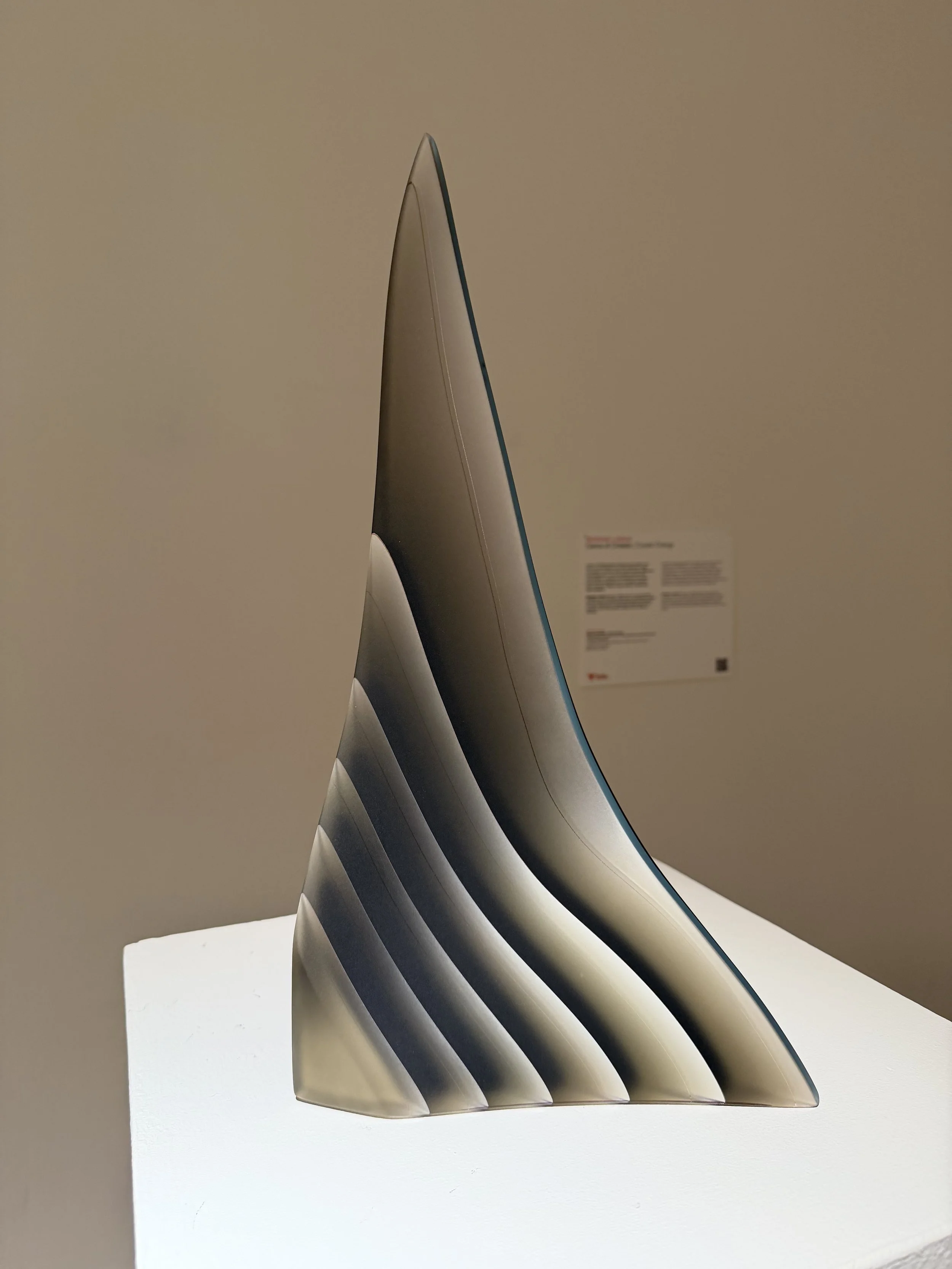
Boldizsár Lukácsi, Crystal Charge. Laminated and hand-sculpted glass, precision cold-worked.
Frida Lundén Mörck’s The River (Sebbeto) expanded glass beyond the object itself. A long, delicate structure descends from the ceiling towards a circular base, while its projected reflections spread across the architecture above. What stayed with me was the work’s simultaneous fragility and reach: the physical glass is narrow and almost vulnerable, but the light it releases occupies the entire room. The installation made movement visible without representing it literally, connecting the continuous flow of a river with memory, change and the traces that remain.
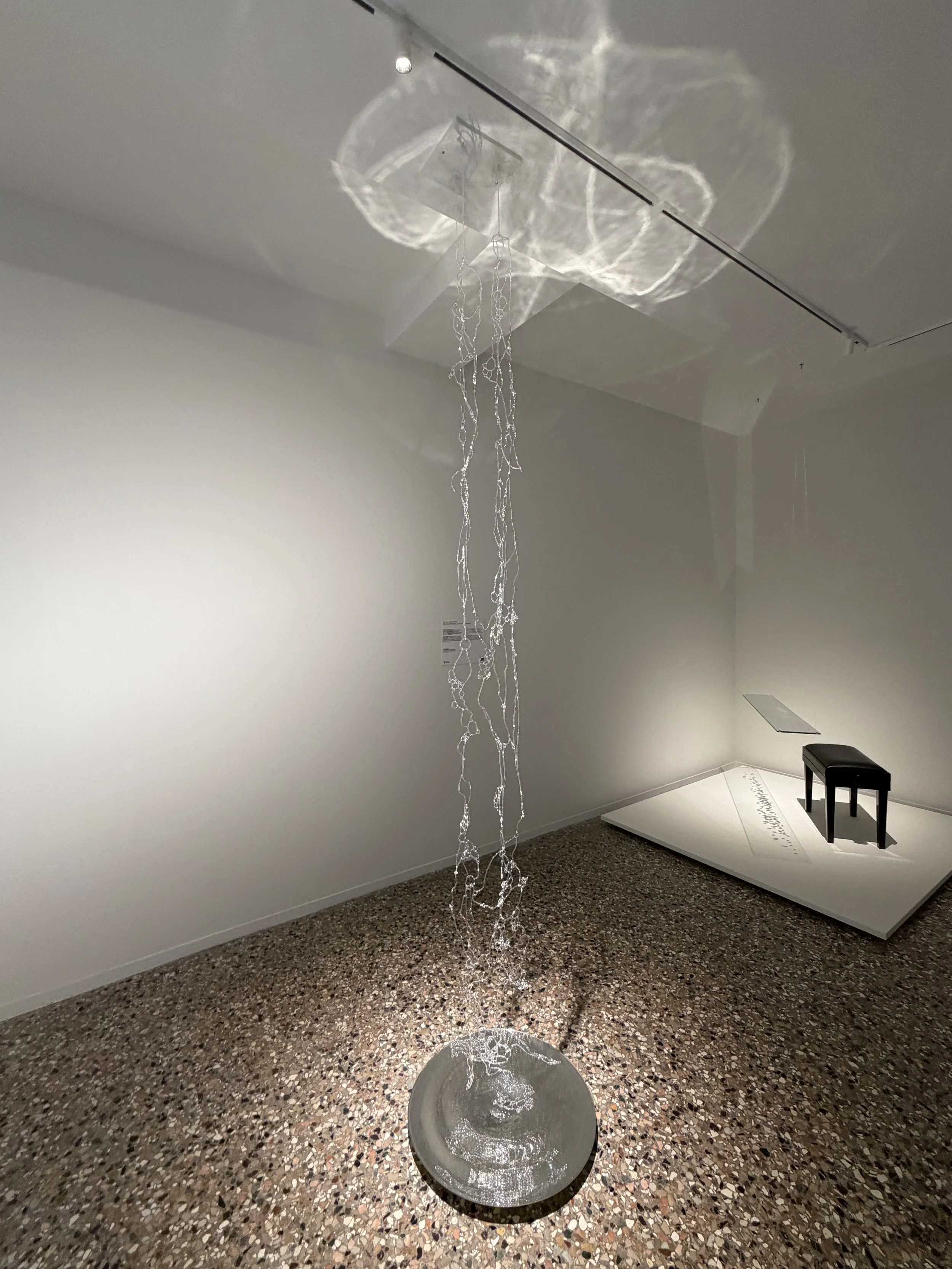
Frida Lundén Mörck, The River (Sebbeto). Flameworked glass and blown silvered glass.
What remained
Across both HUBs, the most compelling works were not necessarily the most spectacular. They were the ones that used glass with clarity of intention: to contain light, unsettle balance, preserve evidence of making or extend a small physical form into the surrounding space. Together, they revealed a medium that can be exact and unstable, disciplined and sensuous, ancient in its techniques and entirely contemporary in its questions.
That, for me, was the value of seeing these exhibitions in Venice. The city supplies an extraordinary historical context, but the strongest works did not depend on history alone. They created their own terms of attention - and offered the kind of encounter that continues well beyond the first glance.
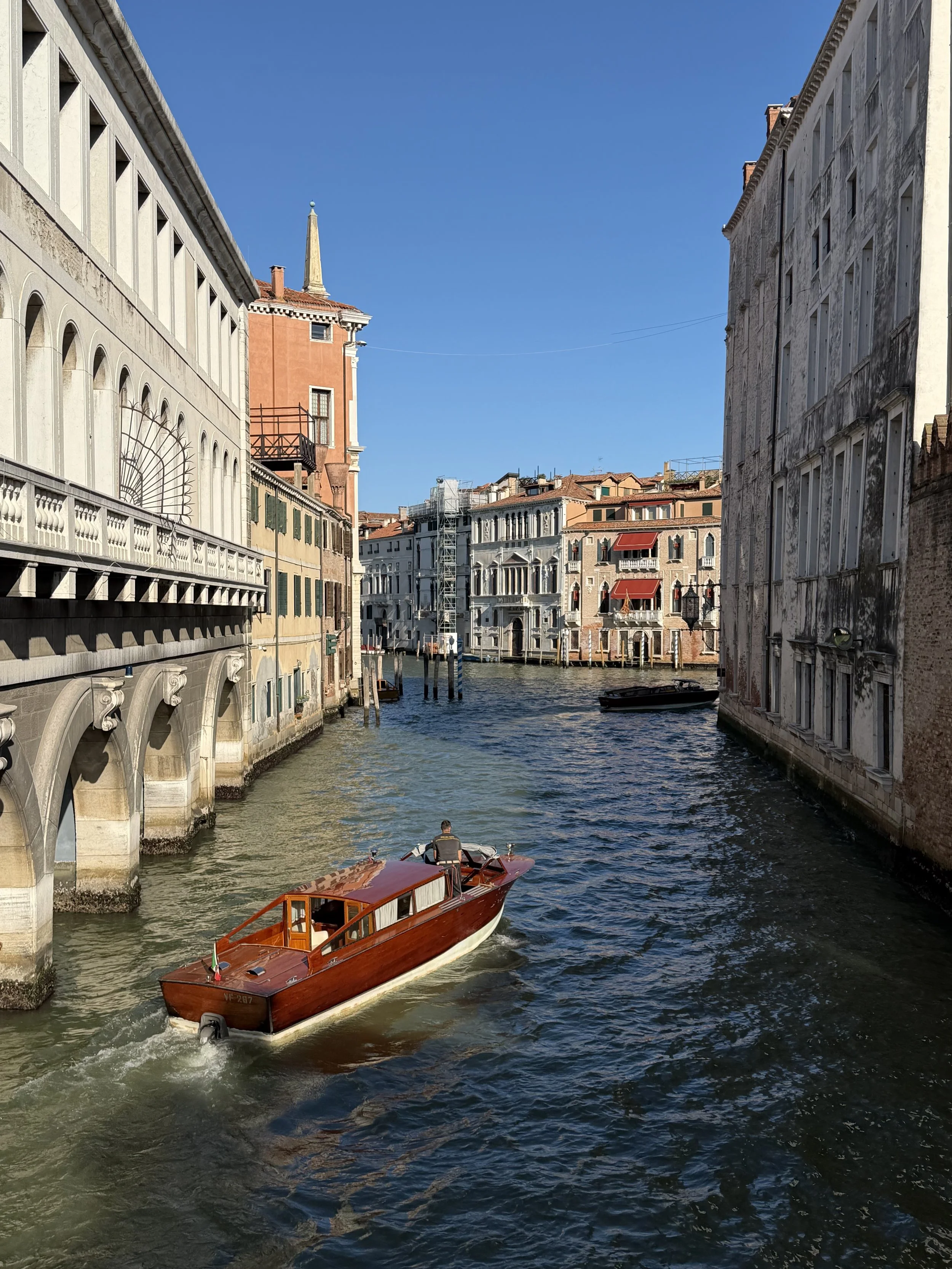
Venice, September 2026.